EN | ES

90 years
union strong

Be a history maker:

Honoring our past, fighting for our future

AFSCME Family,

2026 marks the 90th anniversary of our union — nine decades of working people coming together to build their collective power, to gain a voice on the job, and to strengthen their communities.

From the 1930s, when a group of state workers in Wisconsin banded together to protect their jobs and block political cronies from corrupting public services, to the 1.4 million members fighting today — we haven’t just survived 90 years of history, we’ve SHAPED it.

It’s a history of contracts won and lives improved. Of collective bargaining wins and civil rights progress. And of courageous members who, in moments of crisis, ran to the frontlines.

Across 90 years of history, time and time again, AFSCME members haven’t chosen this line of work to get rich; they’ve done it because they want to make a difference in the lives of their neighbors. They’ve done it because they believe public service is more than a job, it’s a calling.

Today, we continue to face big challenges to our rights and freedoms. But this anniversary, we’re reminded that we are heirs to a history of activists, organizers, and fighters. And when we come together, there’s nothing we can’t overcome.

Lee Saunders

President, AFSCME

Our History

AFSCME was born in the depths of the Great Depression on a simple but powerful idea: that a professional civil service is essential to a strong democracy.

The business of the people should be carried out by those dedicated to serving their communities, not political insiders with powerful connections. That belief has carried AFSCME from a grassroots group of a few thousand workers to one of the biggest powerhouses in the labor movement.

For nine decades, when others stood down, AFSCME organized and took a powerful stand.

1932–1955
Fighting for Civil Service
1932
A small group of white-collar professional employees in Madison, Wis., fearing they would lose their civil service jobs to political patronage, formed the Wisconsin State Employees Association (WSEA), which would later become Council 24 (Wisconsin State Employees Union). This organization was akin to our union in its infancy but wasn't AFSCME yet — that would come a few years later.
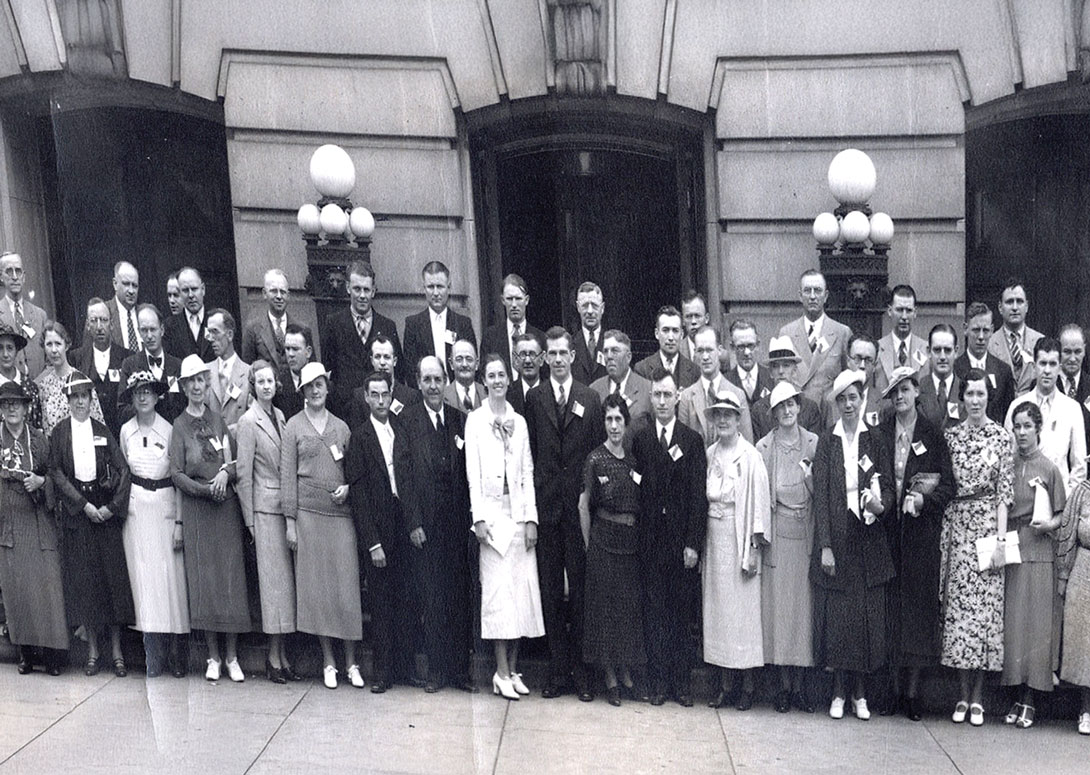
Wisconsin State Employees Association
Members of the Wisconsin State Employees Association (which later became AFSCME Council 24).
1933
WSEA members held meetings, marched, demonstrated and lobbied hard in the state legislature to defeat a bill that would have dismantled the state civil service system.
1935
Similar employee associations emerged in 19 states. At the American Federation of Labor (AFL) convention, the group, now known as the American Federation of State, County and Municipal Employees (AFSCME), was made a "department" of the American Federation of Government Employees (AFGE).
1936
AFSCME was granted a charter by the AFL, marking its beginnings as an independent labor union. Arnold Zander was chosen as AFSCME's first International president after he formed a coalition of 20 public sector locals around the country.
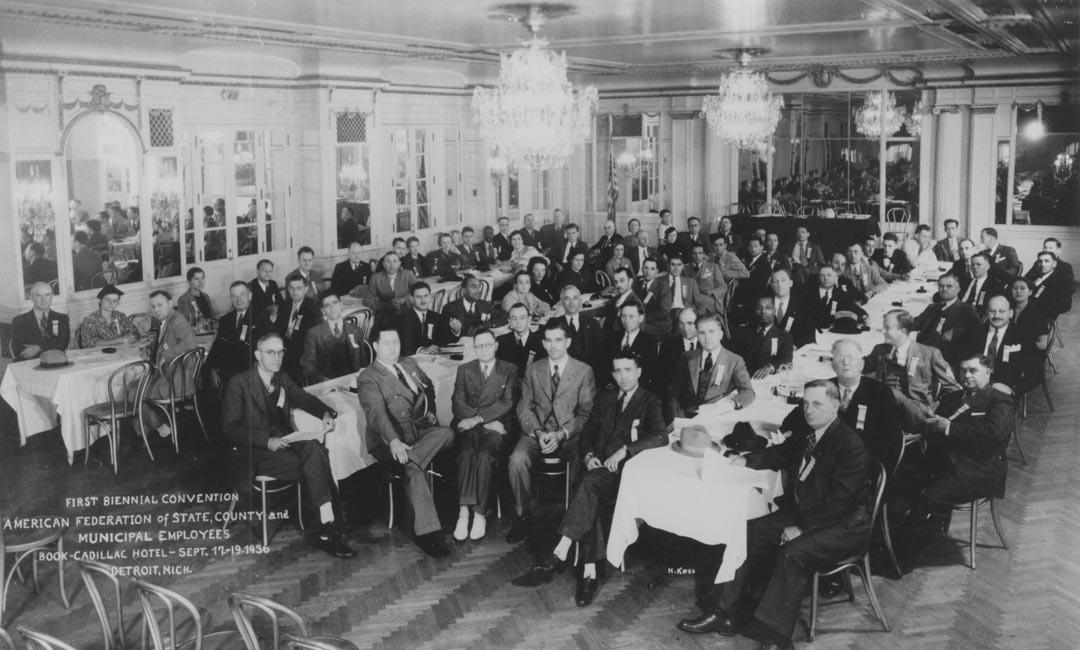
AFSCME Convention 1936
The AFSCME convention took place at the Book-Cadillac Hotel in Detroit, Michigan in 1936.
1938
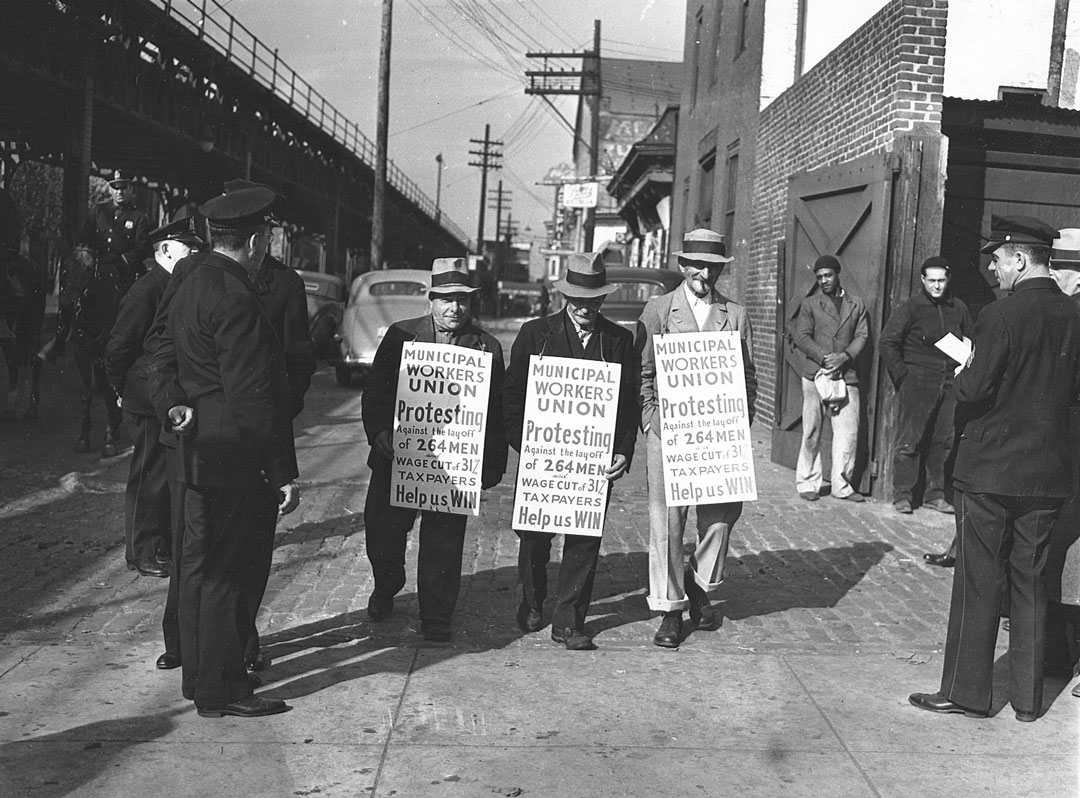
2,000 sanitation workers in Philadelphia went on strike to protest layoffs and pay cuts and won AFSCME's first bargaining agreement with a major city.
Philadelphia strike
2,000 city workers — AFSCME Local 222 members — staged a four-day strike that resulted in the first collective bargaining agreement between the union and a major city.
1936–1945
AFSCME focused on lobbying in state legislatures to pass or strengthen civil service laws; membership increased from 10,000 to 73,000.
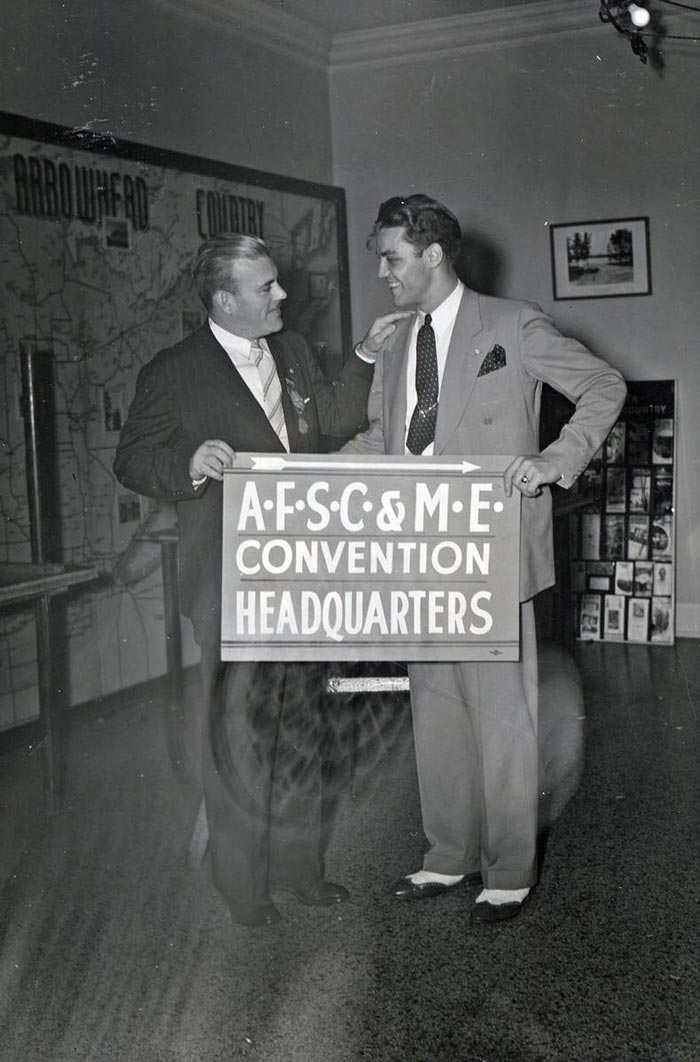
1940 Convention
Two men hold a sign for AFSCME's 1940 Convention in Duluth, Minnesota
1945–1946
World War II ended. The postwar period was marked by a wave of strikes as workers — 3.5 million in 1945 and 4.6 million in 1946 — struck for higher wages in the postwar economy. There was also unrest in the public sector as city employees struck in several cities.
1947
Eight states passed laws that would penalize striking public workers. Congress passed the Taft-Hartley Act, which restricted private-sector unions and made it easier for employers to break strikes.
1955
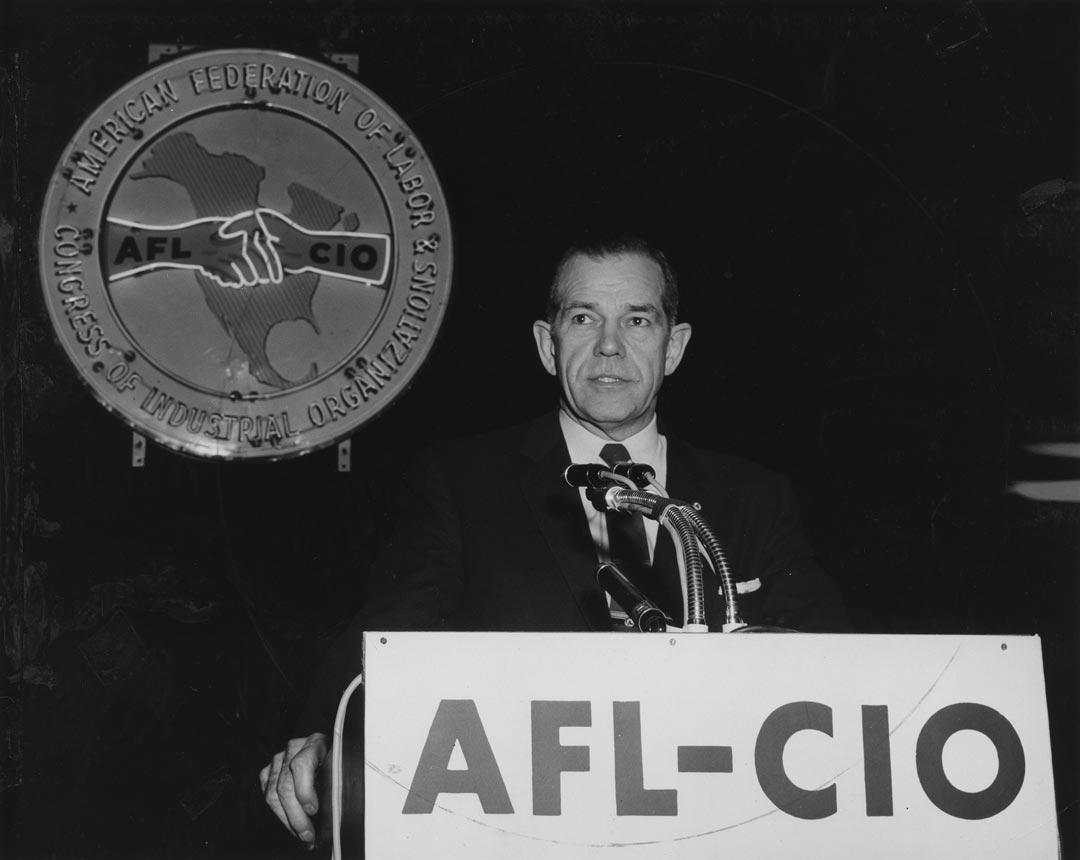
AFL and CIO (Congress of Industrial Organizations) merged to form the AFL-CIO. AFSCME membership passed 100,000.
Zander at AFL-CIO
AFSCME President Arnold S. Zander reports to the AFL-CIO Convention in Washington, D.C.
1958–1965
Bargaining for Rights
1958
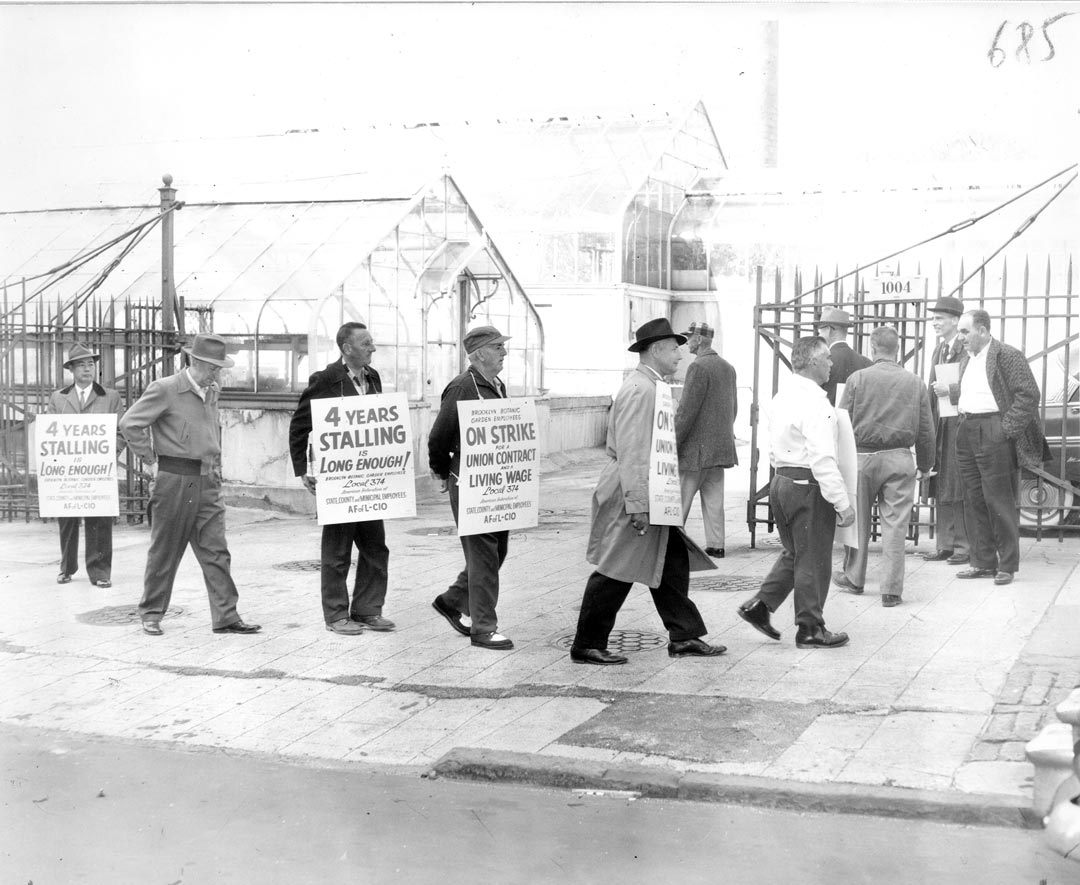
A series of strikes and demonstrations in New York City pressured Mayor Robert Wagner to sign an executive order granting collective bargaining rights to unions representing city employees. Under the leadership of District Council 37 President Jerry Wurf, AFSCME began winning elections that made it the strongest public worker union in the city.
NYC Parks Strike
NYC Department of Parks employees on strike, Local 374 (later local 147) Brooklyn Botanic Garden Employees
1961
President John F. Kennedy issued Executive Order 10988, legitimizing collective bargaining for federal employees and creating a favorable atmosphere for all public employees.
1964
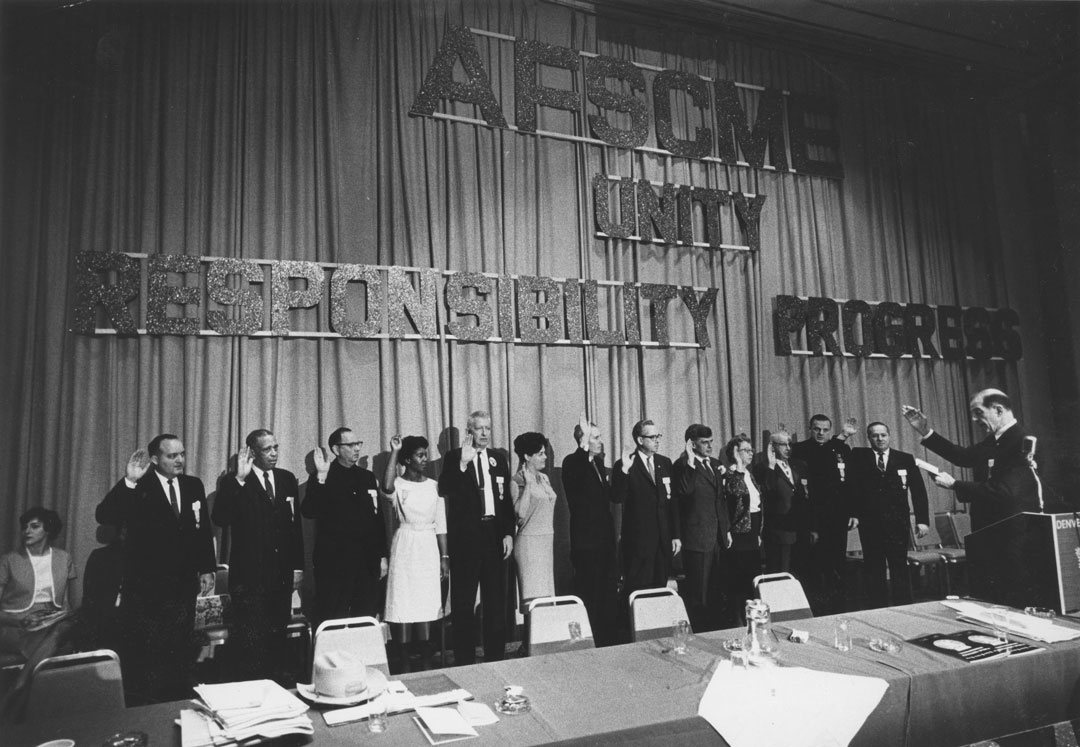
Jerry Wurf — running on a platform of aggressive organizing, fighting for collective bargaining rights for public workers, and union reform/union democracy — was elected the second International president at the biennial AFSCME Convention.
1964 Convention
Outgoing President Arnold Zander swears in new officers, including new President Jerry Wurf, at the 1964 AFSCME Convention in Denver, CO
1965
A special AFSCME Convention rewrote AFSCME's Constitution and included a Bill of Rights for union members, a first in the American labor movement. By year's end, several states enacted collective bargaining laws for public employees. AFSCME membership reached 250,000.
Mid 1960s–1975
Militant Demands for Respect
Mid 1960s
More states passed collective bargaining laws. AFSCME's demands for respect for public workers became linked with the civil rights movement and progressive groups that protested economic, racial and social injustice.
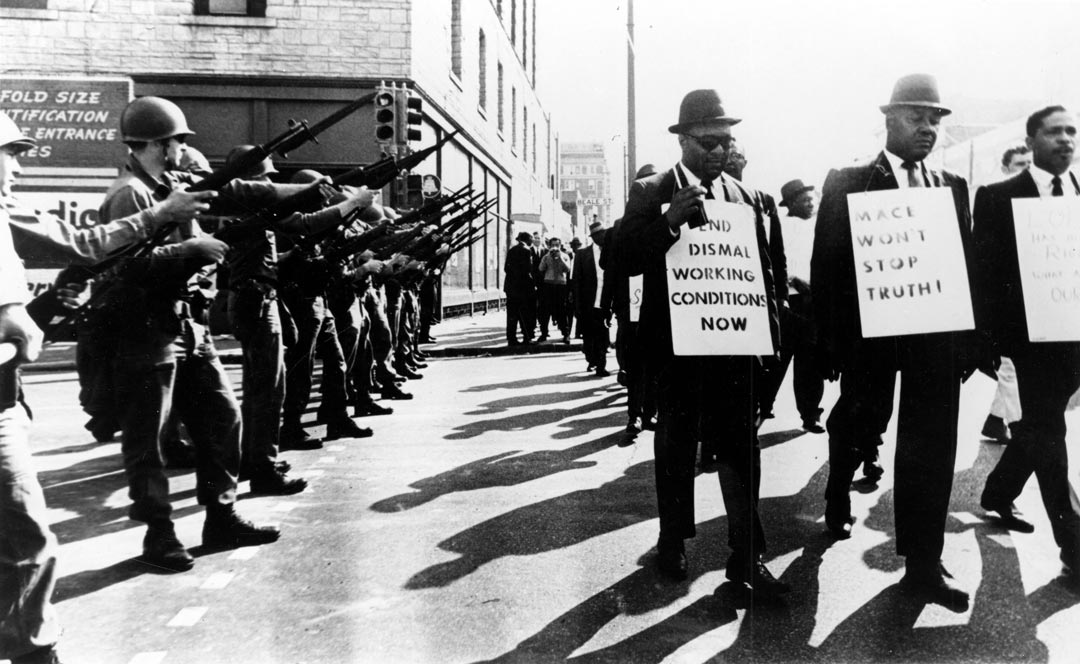
Memphis strike
AFSCME Local 1733 sanitation workers strike in Memphis with National Guard members looking on.
1968
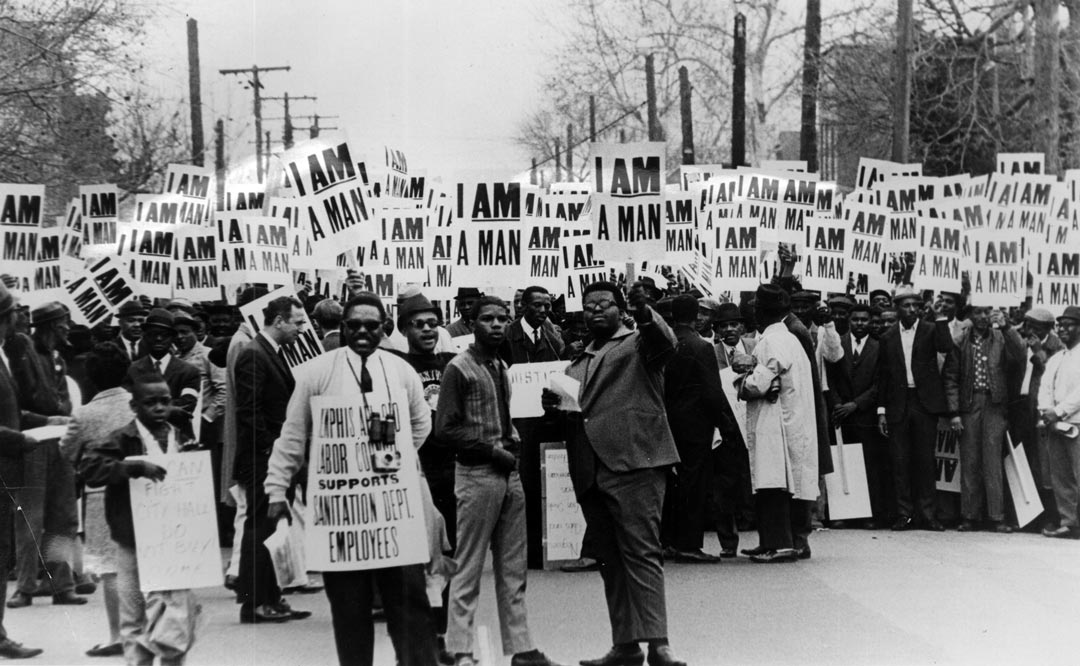
Sanitation workers in Memphis, Tenn., struck for union recognition and against the city's discriminatory practices. Dr. Martin Luther King Jr., marched with the striking workers and was assassinated. The city agreed to recognize the workers' union, AFSCME Local 1733.
Memphis 1968
Striking members of Memphis Local 1733 hold signs whose slogan symbolized the sanitation workers' campaign in 1968.
1972
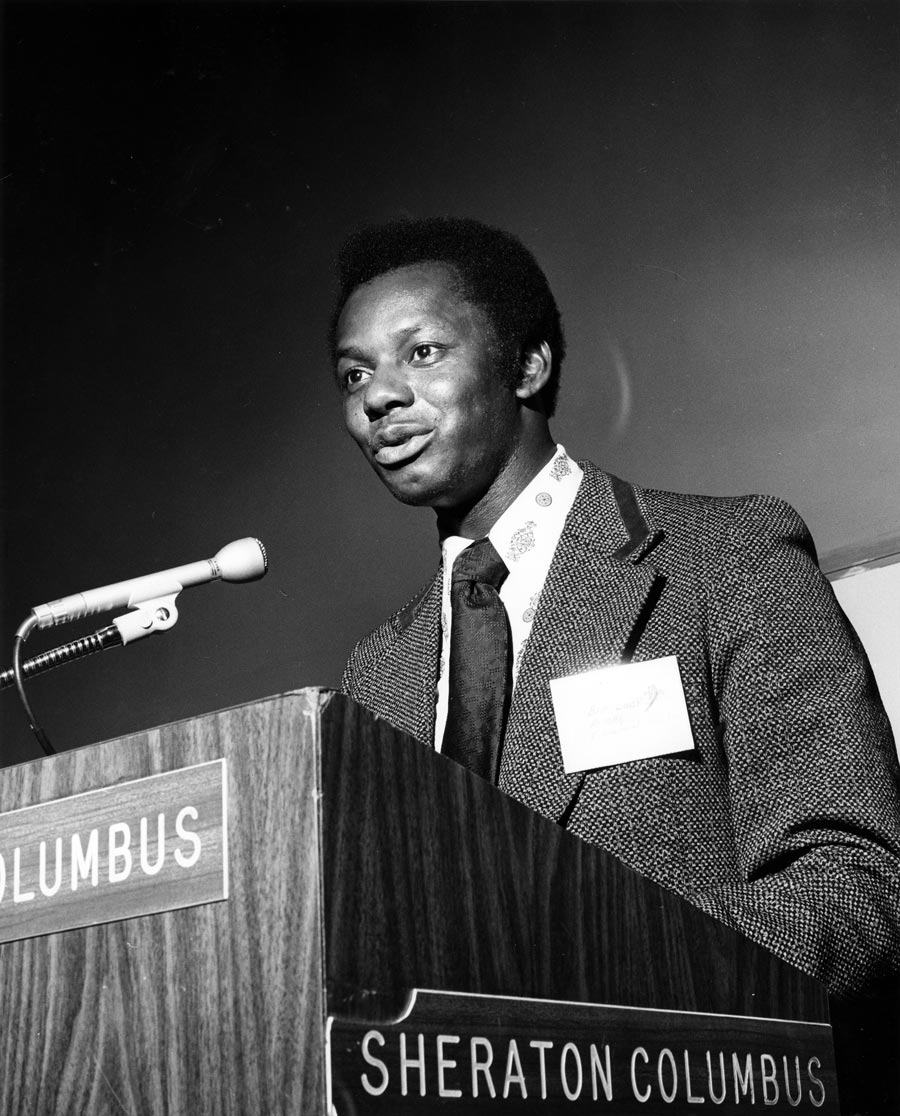
William Lucy was elected secretary-treasurer of the International union. A lifelong civil rights activist, Lucy worked closely with Dr. Martin Luther King, Jr. in Memphis, Tenn. and led labor's delegation to South Africa after the election of President Nelson Mandela.
Bill Lucy
Bill Lucy served as AFSCME secretary-treasurer for 38 years.
1975
In Pennsylvania, some 46,000 AFSCME-represented state workers struck for fair wages — the first legal, large-scale strike by public employees.
Mid 1970s–1998
Power Through Organizing and Political Action
Mid-1970s
Over 60 independent employee associations affiliated with AFSCME.
Hawaii affiliation
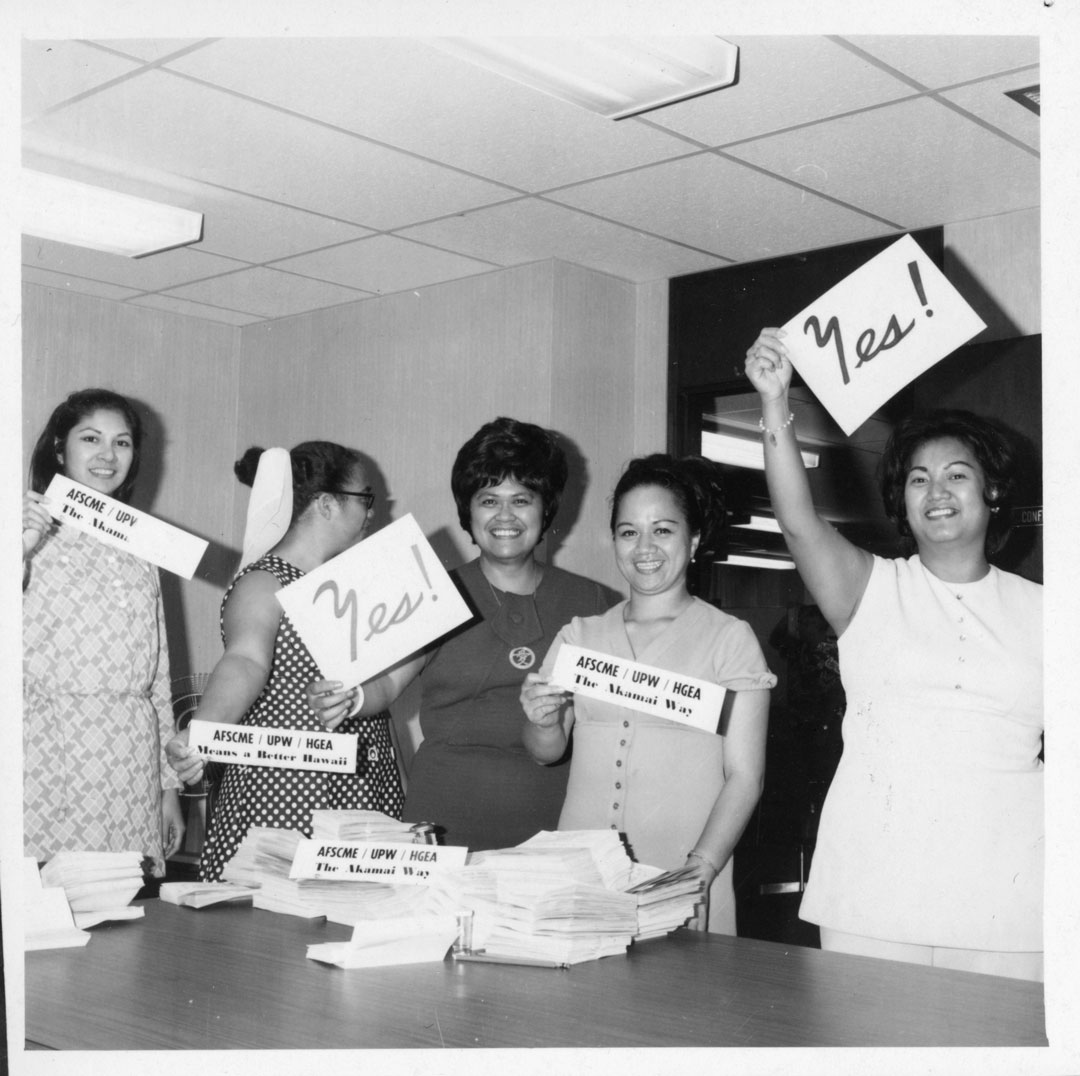
HGEA (Hawaii Government Employees Association) and UPW (United Public Workers) members voted to affiliate with AFSCME in 1971.
1978
The New York Civil Service Employees Association (CSEA), with 250,000 members, affiliated with AFSCME and pushed membership over the 1 million mark.
Wurf and CSEA
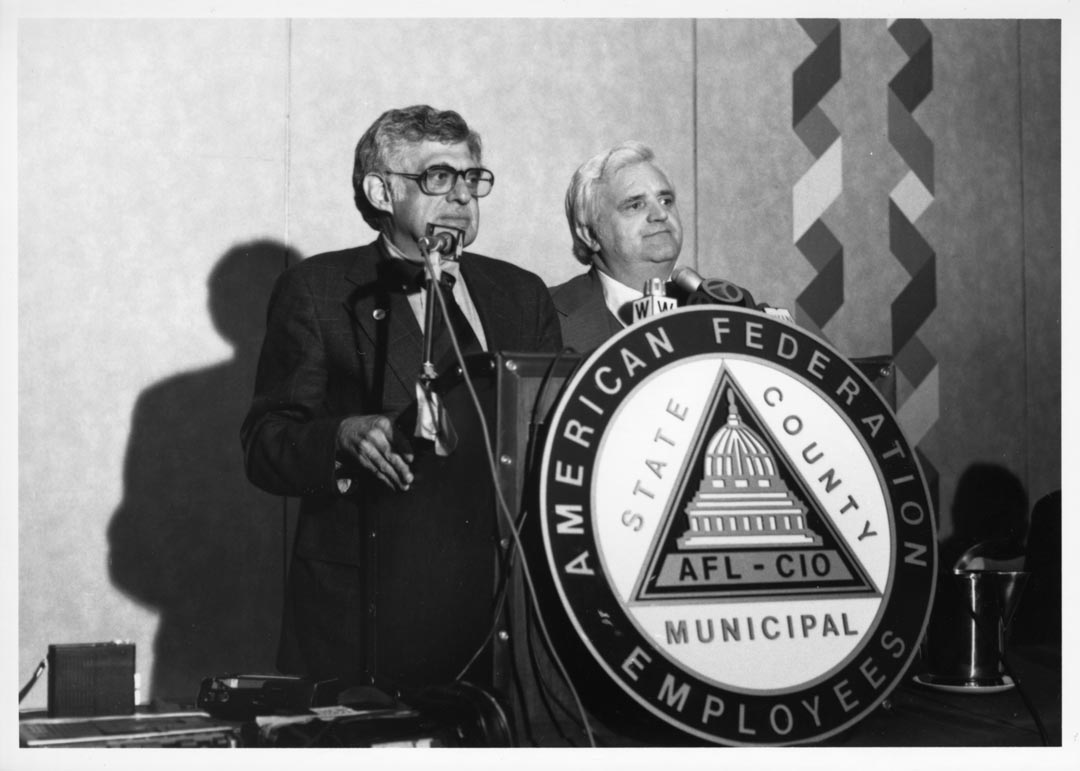
AFSCME president Jerry Wurf and CSEA president William L. McGowan at a podium, 1978.
1980s
In an era of anti-public worker sentiment, AFSCME greatly increased its political activism and visibility and helped elect AFSCME-endorsed candidates at all government levels. Collective bargaining rights were won in three new states: Illinois, Ohio and Nebraska.
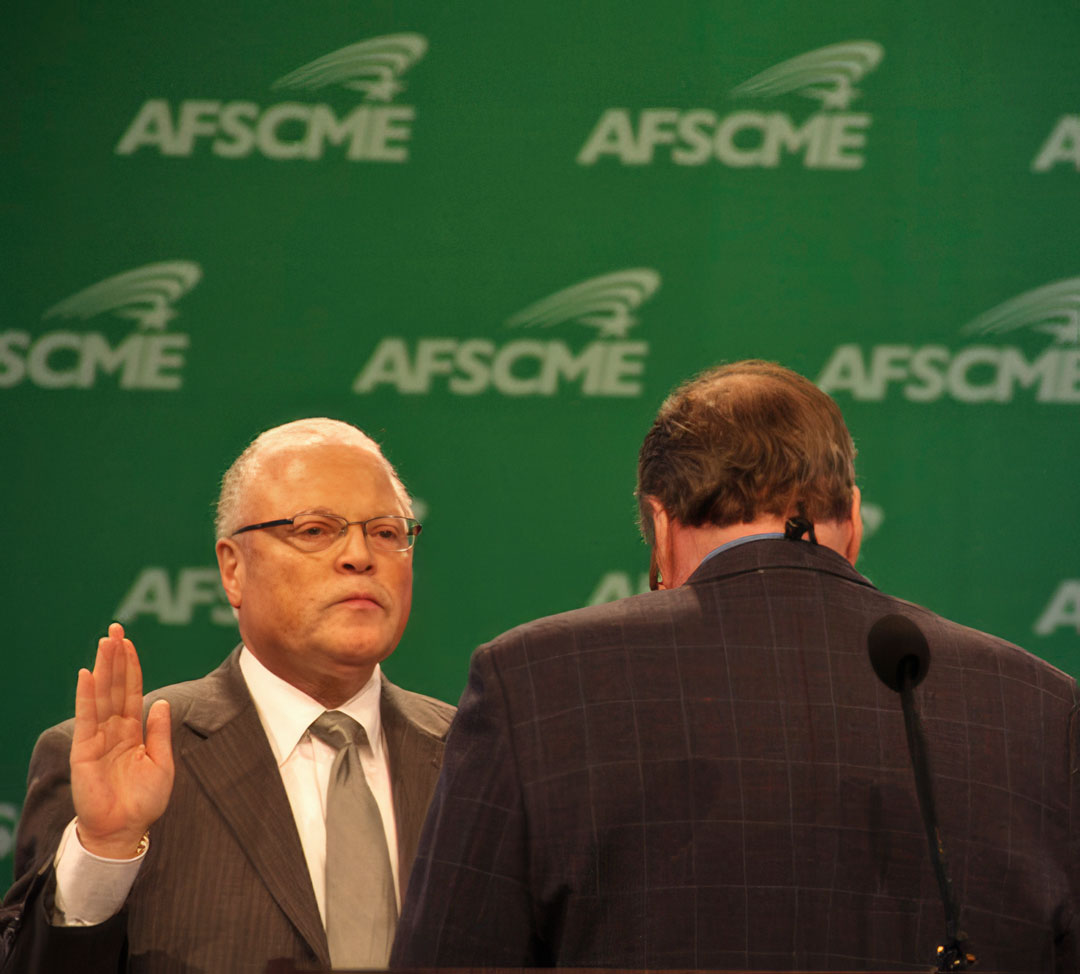
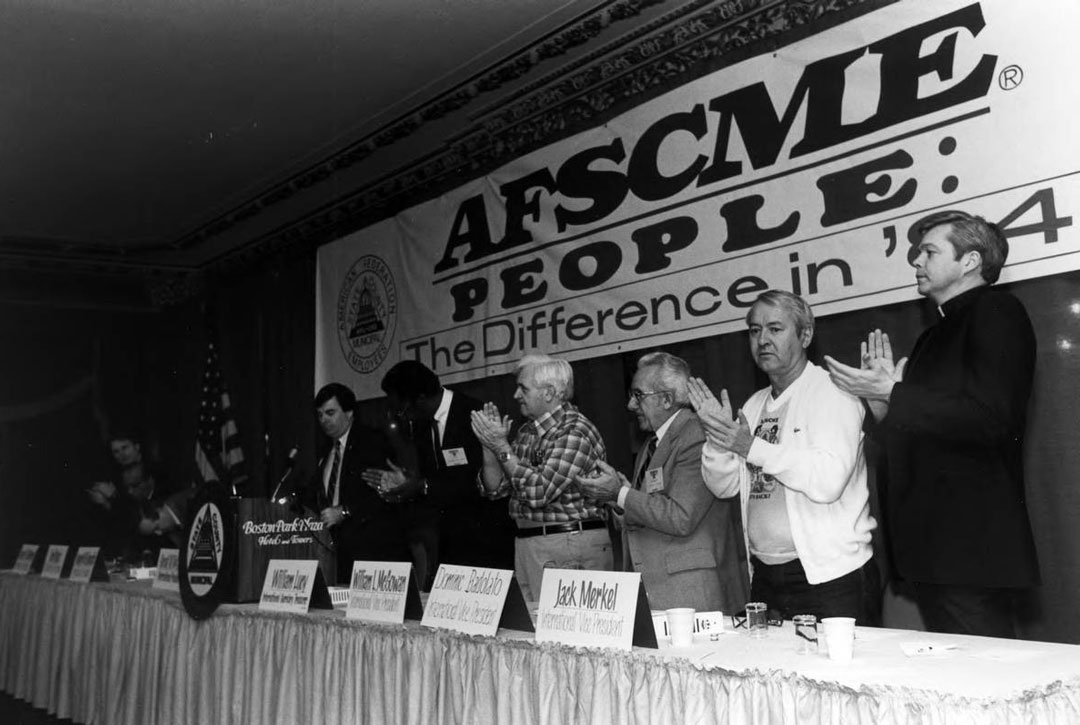
1983 Political Action Conference
AFSCME International Vice Presidents Jack Merkel, Dominic Bodalato, and William McGowan, along with Secretary-Treasurer William Lucy and President Gerald McEntee at the 1983 AFSCME Political Action Conference in Boston.
1981
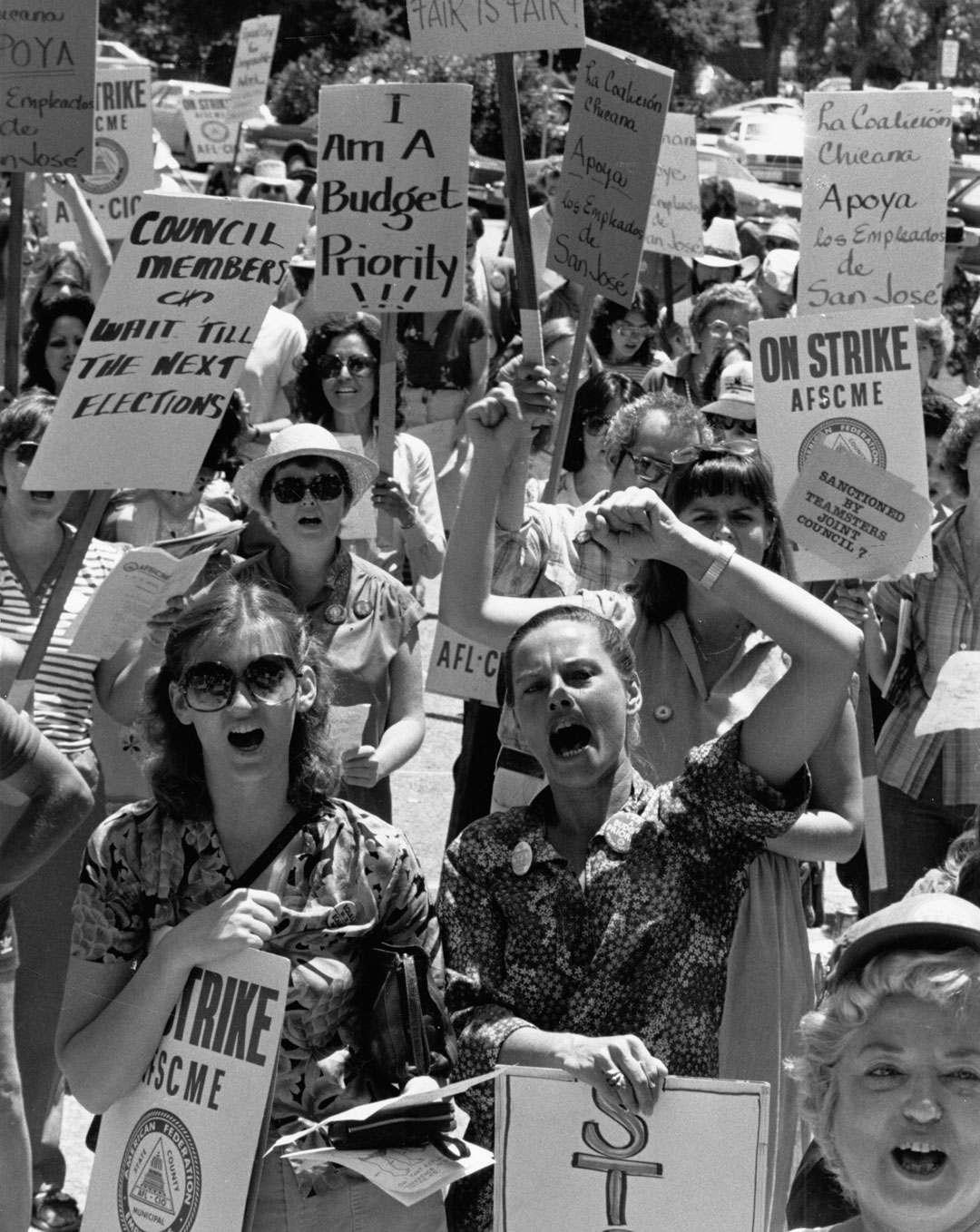
President Ronald Reagan broke a strike by PATCO, beginning an era of attacks on workers. AFSCME's 60,000-member delegation led the AFL-CIO Solidarity Day. City workers in San Jose, Calif., members of AFSCME Local 101, waged the first strike in the nation's history over the issue of pay equity for women workers.
Pay equity strike
Members of AFSCME Local 101 in San Jose, CA struck for pay equity for women in 1981.
1981
AFSCME President Jerry Wurf died. Following his death, union members and friends created the Wurf Memorial Fund to honor his life and legacy. It provides support for research, scholarship and leadership development to promote public sector unionism and strengthen union leaders' capacity to meet 21st-century challenges. Gerald McEntee was chosen as the union's third International president.
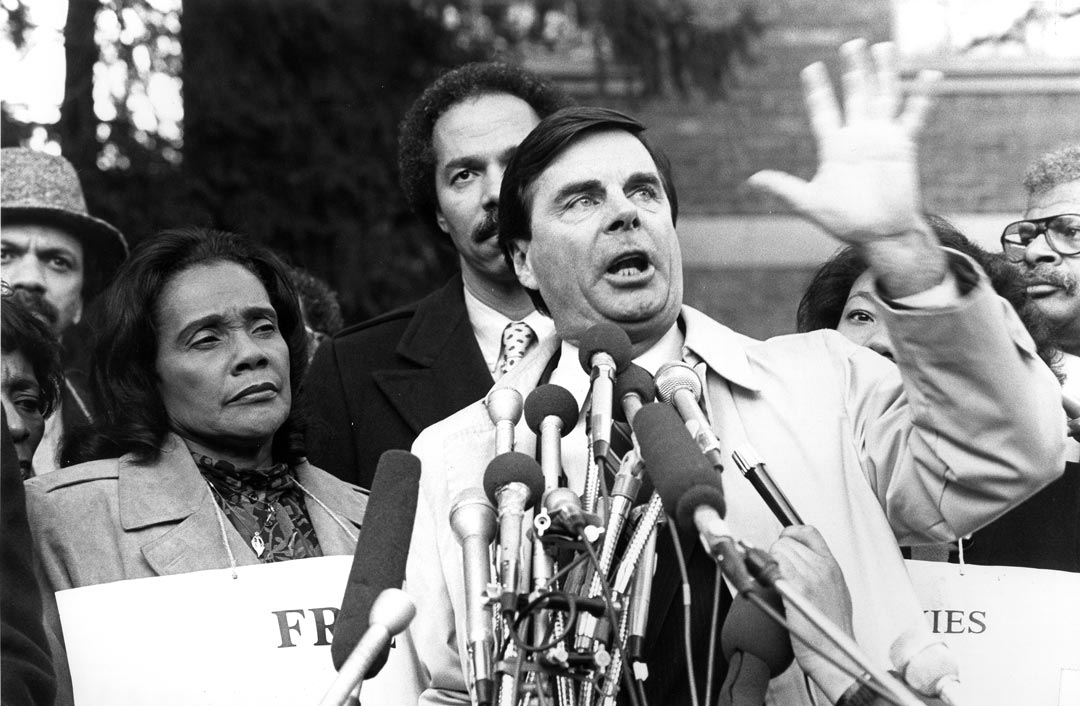
McEntee and Coretta Scott King
Coretta Scott King listens as AFSCME President Gerald McEntee speaks at a rally against apartheid outside of the South African embassy in Washington, D.C.
1989
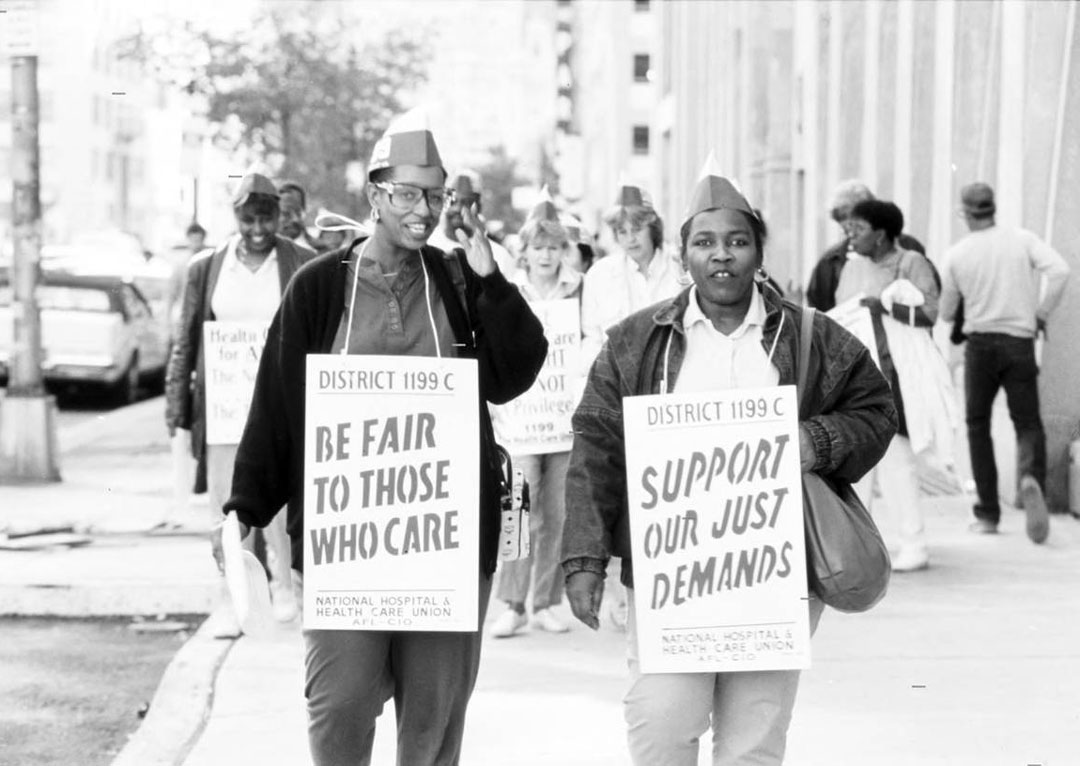
The National Union of Hospital and Health Care Employees (NUHHCE) affiliated with AFSCME and solidified our union as the leading voice for the rights of health care workers.
NUHHCE
Two members of AFSCME Local 1199C, the National Union of Hospital & Health Care Employees (NUHHCE), demonstrate in Philadelphia.
1990
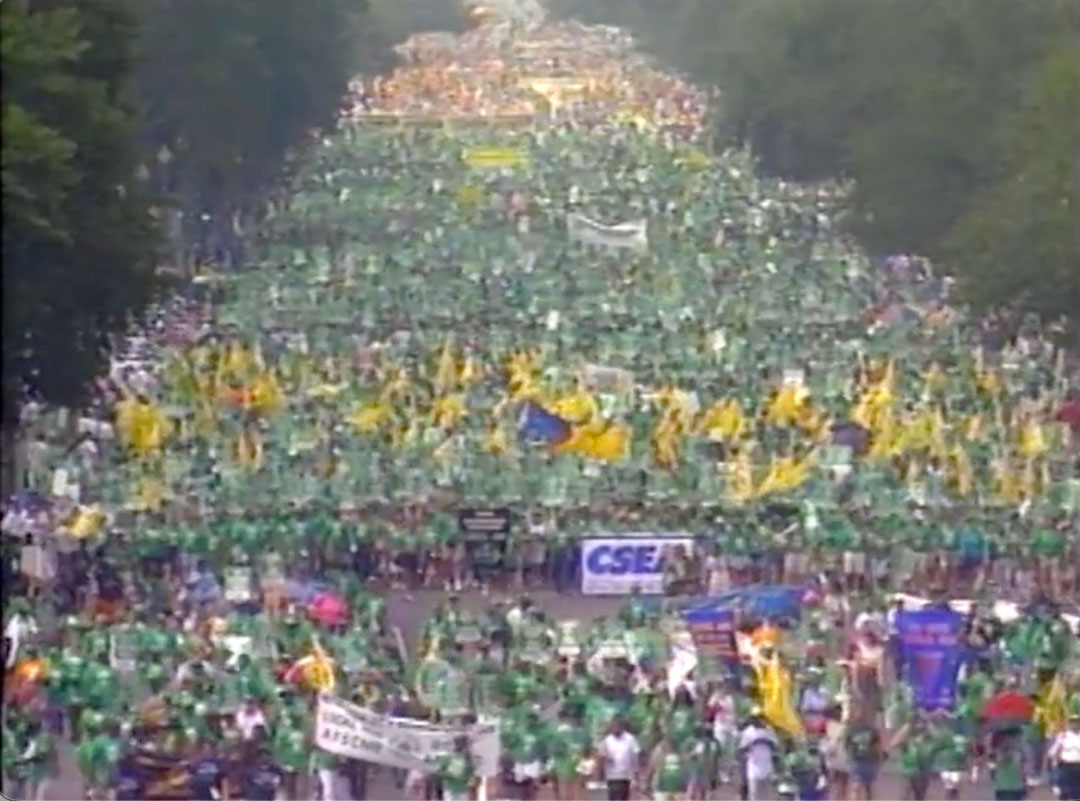
AFSCME membership surpassed 1.2 million.
AFSCME mass mobilization
AFSCME members engage in mass mobilization to defend workers' rights as membership surpasses 1 million.
1998
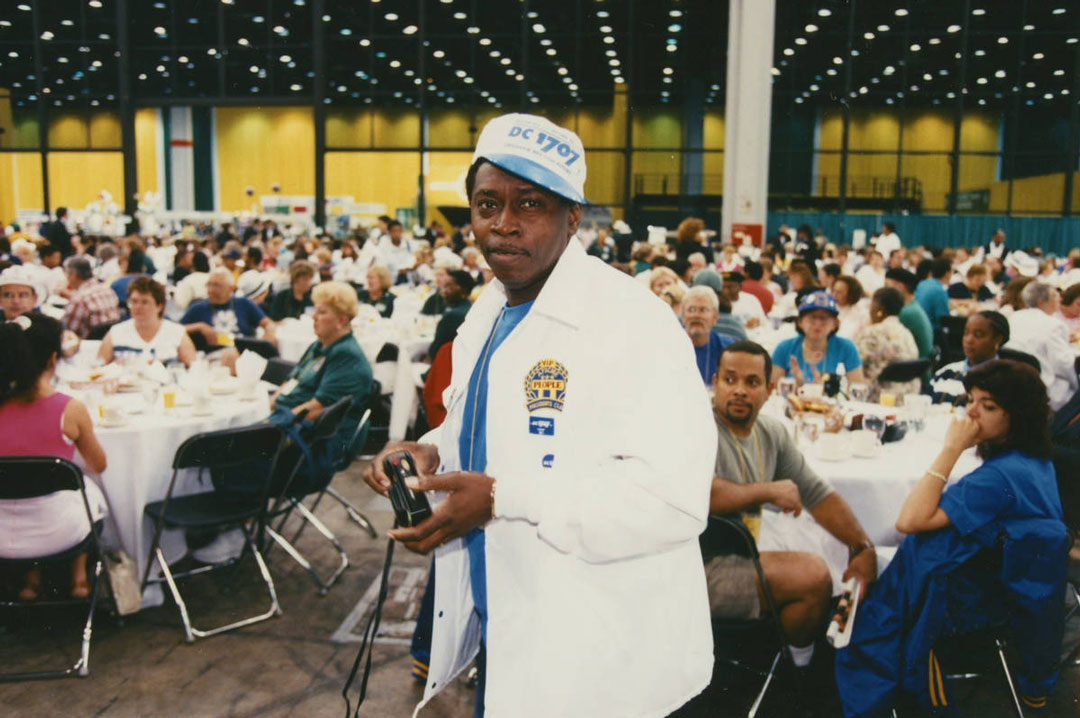
Delegates at AFSCME's Convention committed to a bold program of aggressive organizing.
Convention
A delegate to AFSCME's convention representing DC 1707.
2001–2019
AFSCME in the 21st Century
2001
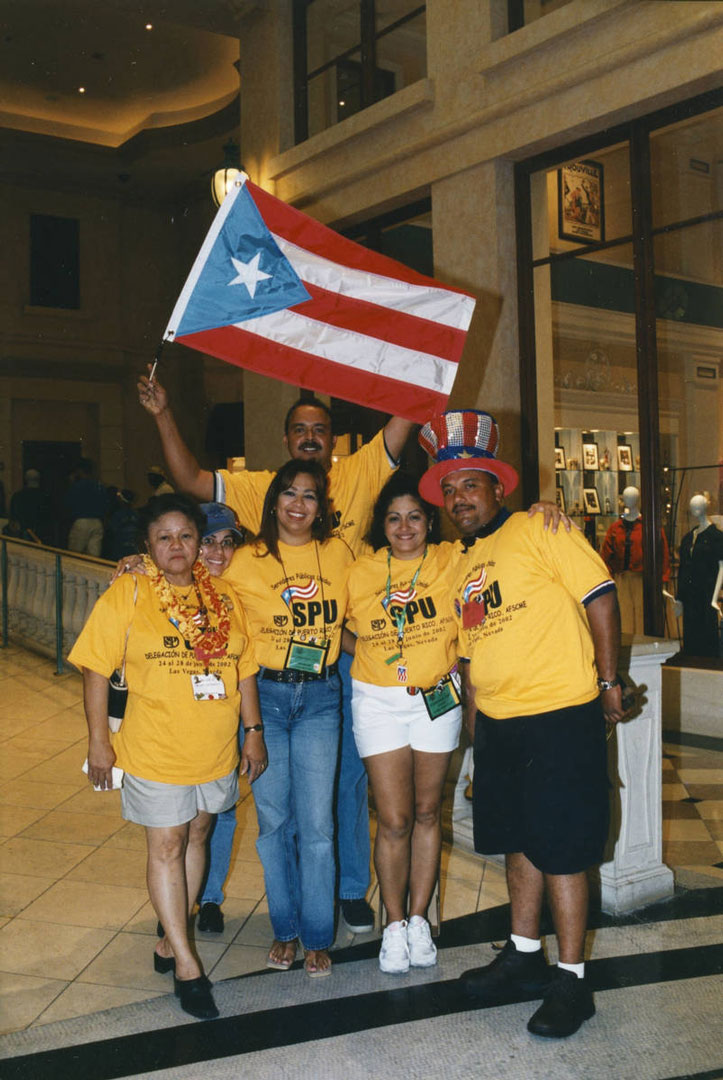
60,000 public service workers in a dozen states and Puerto Rico organized with AFSCME — the largest single year of organizing in three decades.
Puerto Rico convention
AFSCME delegates and guests from Puerto Rico pose for the camera during the 35th Convention in Las Vegas, Nevada.
2002
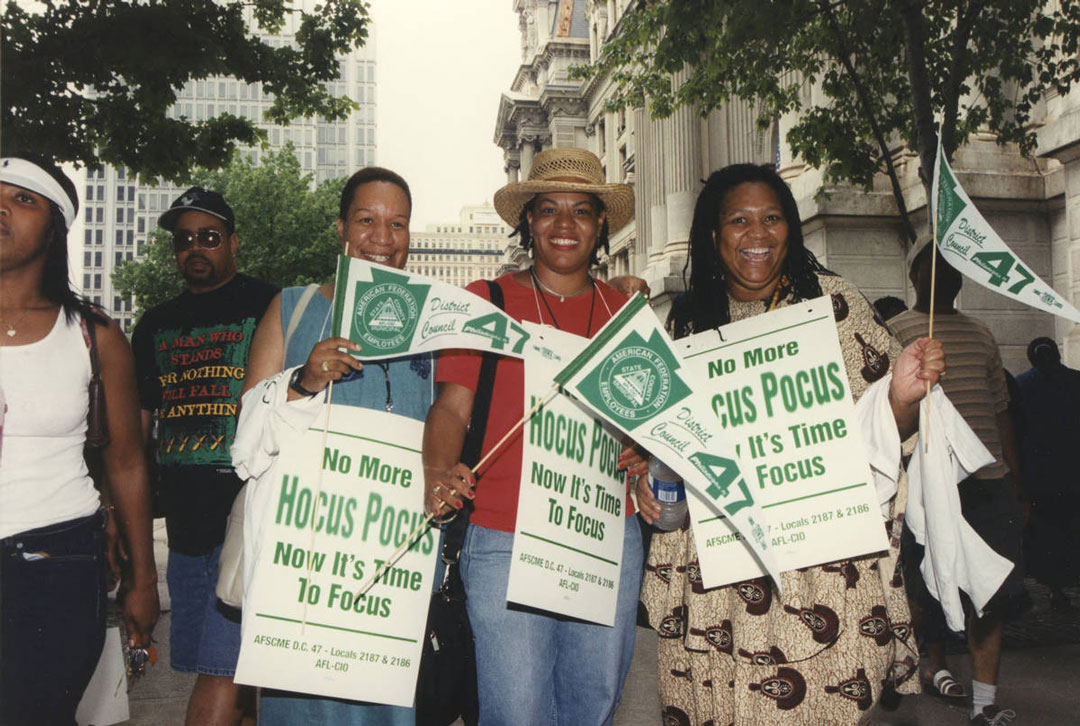
Another 55,000 workers joined AFSCME; membership reached 1.3 million.
Convention rally
Attendees at a rally at City Hall hold signs reading "No more hocus pocus. Now it's time to focus." from Council 47 in Philadelphia PA.
2004
AFSCME Convention delegates passed the 21st Century Resolution, creating a committee to examine every aspect of our union and to make recommendations to the 2006 AFSCME Convention.
2006
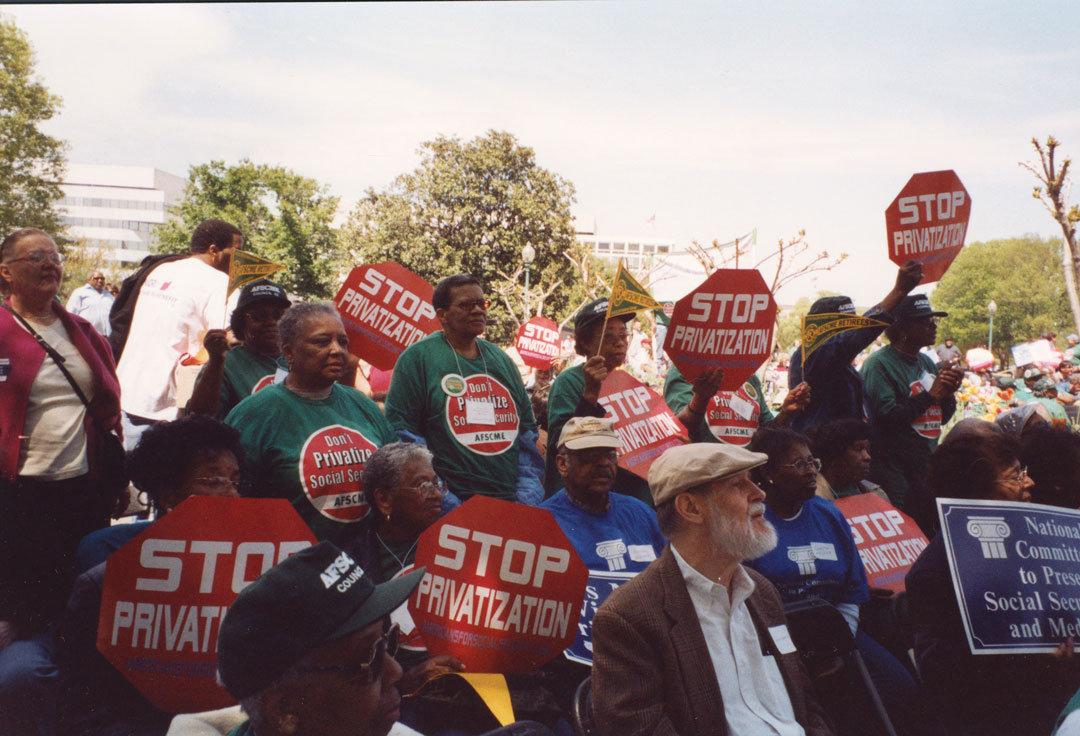
AFSCME increased its ranks to 1.6 million members. The 21st Century Power to Win plan was adopted at the 37th AFSCME International Convention. Due to grassroots efforts across the country, AFSCME helped stop the Bush administration from privatizing Social Security. Through concerted efforts, we helped win six governors' houses and took back legislative chambers in 10 states, and won back the U.S. House of Representatives and the U.S. Congress.
Social Security rally
AFSCME retirees rally against privatizing Social Security.
2007
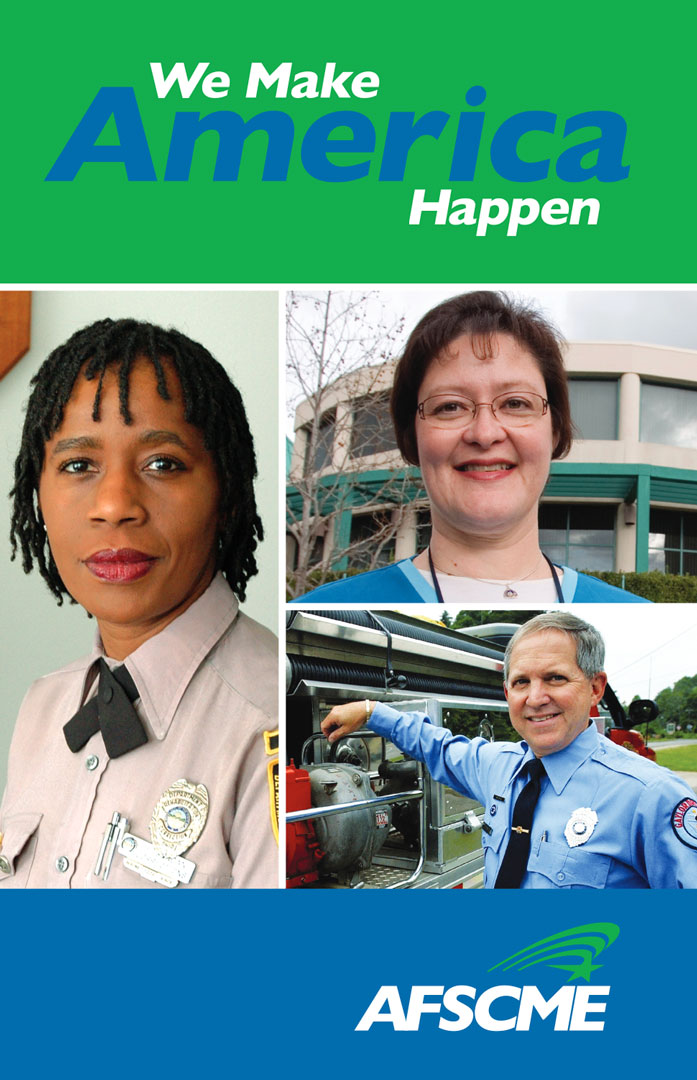
AFSCME created a new brand and identity which included the new logo and tagline: We Make America Happen.
AFSCME brand refresh
In 2007, AFSCME refreshed its brand identity, featuring a new logo and tagline.
2008
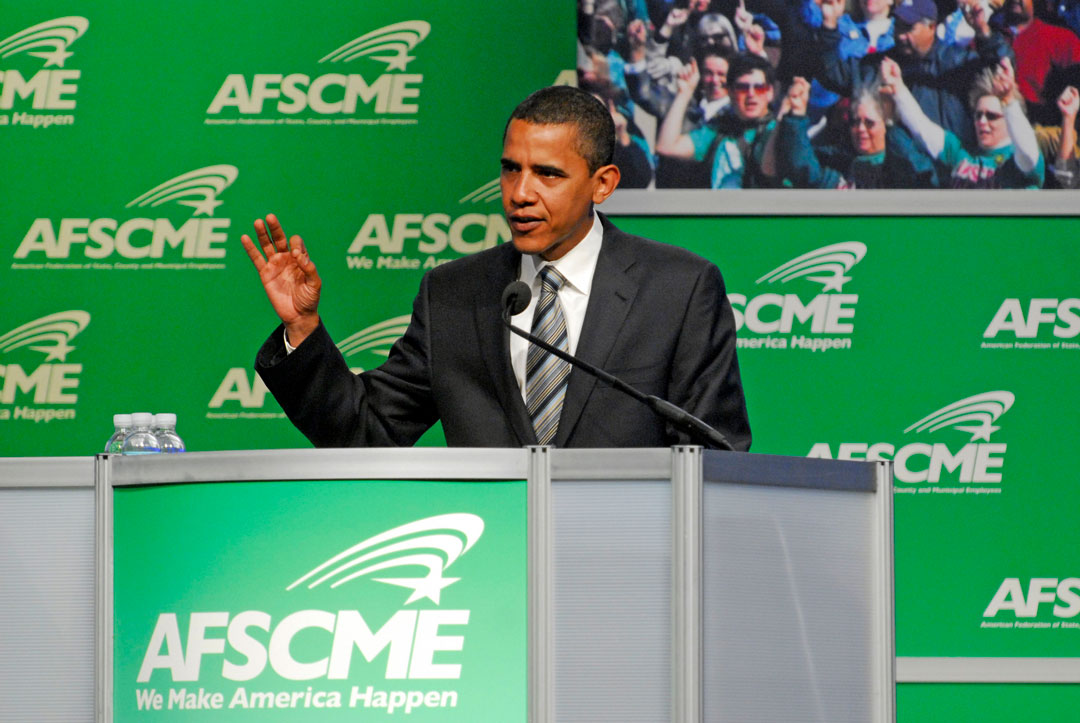
40,000 volunteers mobilized to elect President Barack Obama and Vice President Joe Biden.
Obama election
Before and during his presidency, President Barack Obama addressed AFSCME members at our International Convention.
2009
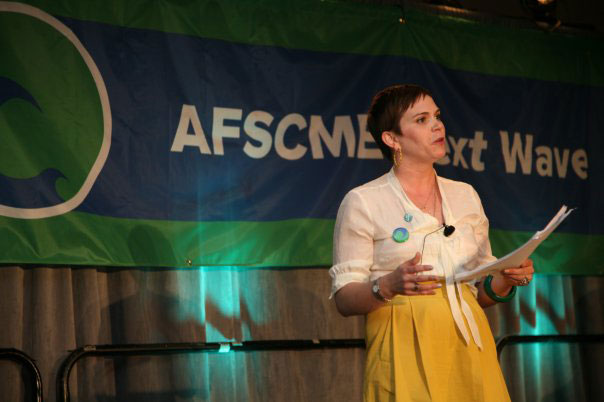
AFSCME was the top organizing union in the AFL-CIO. AFSCME played a major role in winning health care reform and getting fiscal relief for states through the American Reinvestment and Recovery Act (ARRA). AFSCME convened the first-ever national Next Wave Conference in Chicago, Illinois.
Next Wave Conference
AFSCME Next Wave empowers young members in our union in the fight for dignity and economic prosperity.
2010
Lee A. Saunders was elected International secretary-treasurer in July at the International Convention.
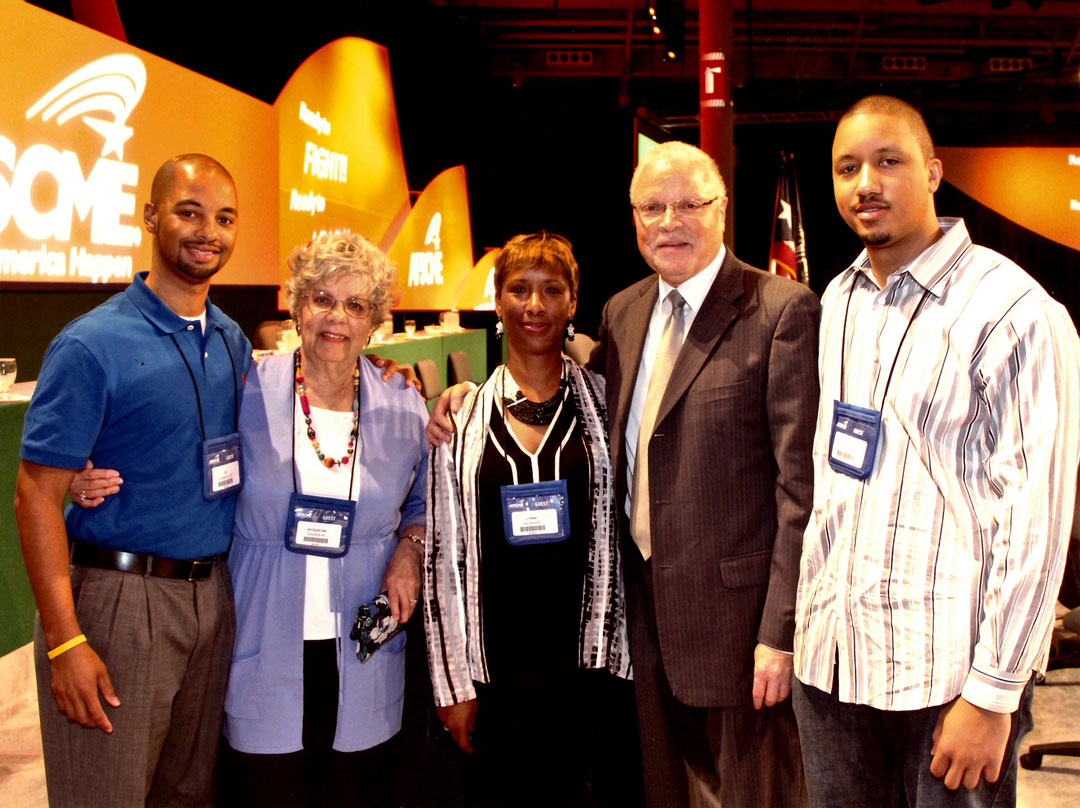
Lee Saunders family
Lee Saunders poses with his family after being sworn in as secretary-treasurer at the 39th AFSCME International Convention in Boston.
2011
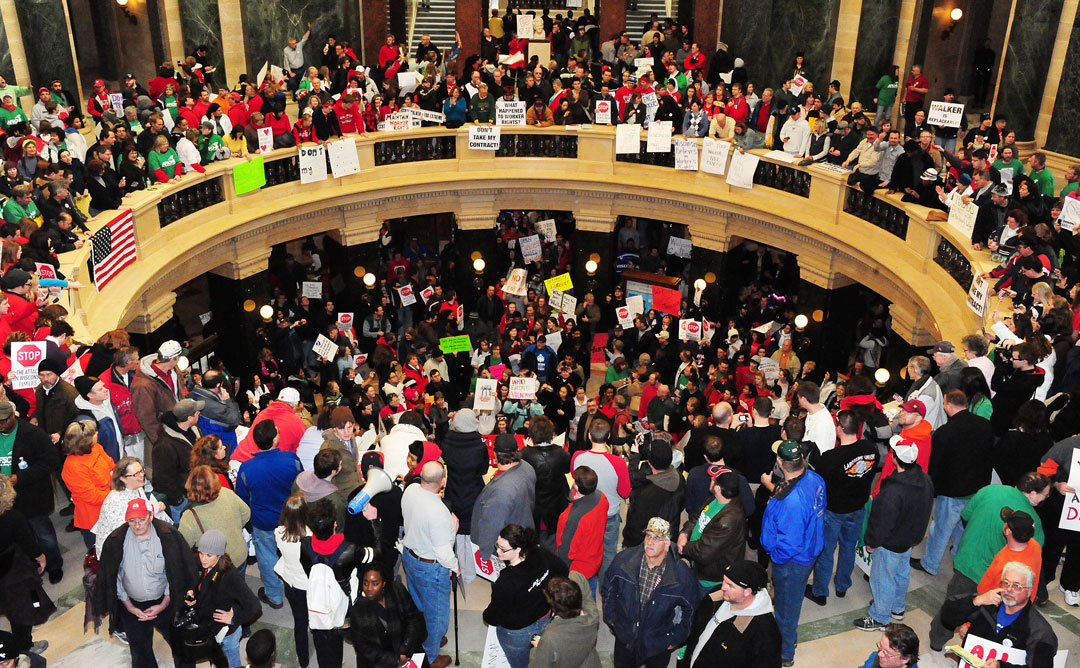
In February 2011, nearly 200,000 Wisconsin public service employees, including more than 60,000 AFSCME members, lost the right to bargain collectively. Tens of thousands of protestors demonstrated at the Capitol in Madison for months.
Wisconsin protest
In the state where AFSCME was born, thousands of Wisconsin public service workers and supporters flooded the Capitol in Madison to oppose Gov. Scott Walker's anti-union bill.
2001–2019
AFSCME in the 21st Century cont.
2011 cont.
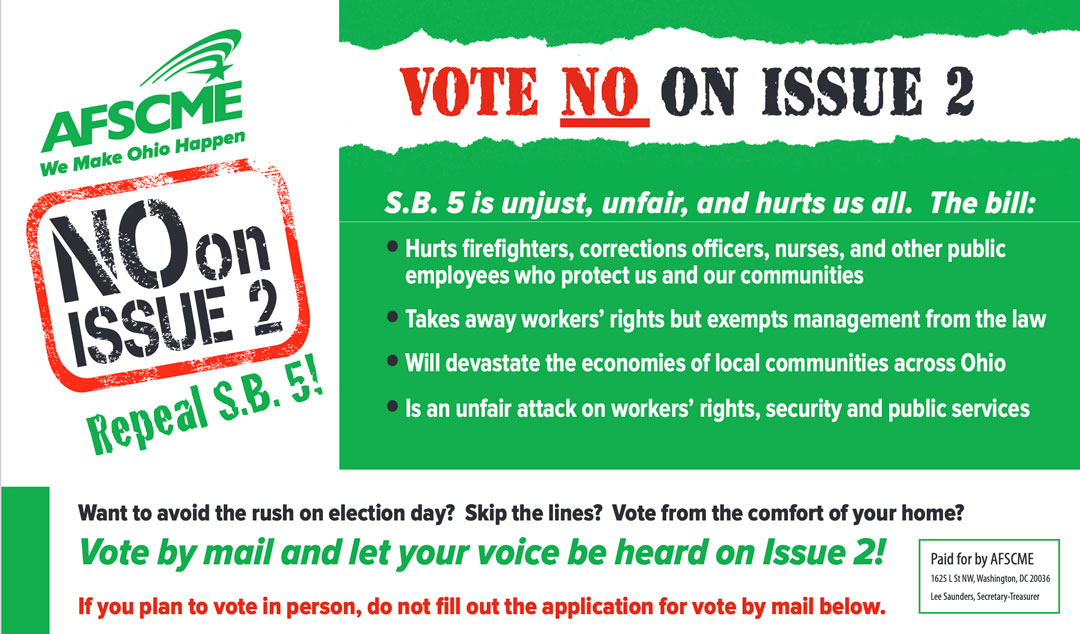
In Ohio, Senate Bill 5 (SB 5) targeted collective bargaining for public workers. Ohioans overwhelmingly voted to repeal SB 5 and to protect collective bargaining for public employees.
Ohio protest
AFSCME members mobilized to protect collective bargaining rights for public employees in Ohio.
2012
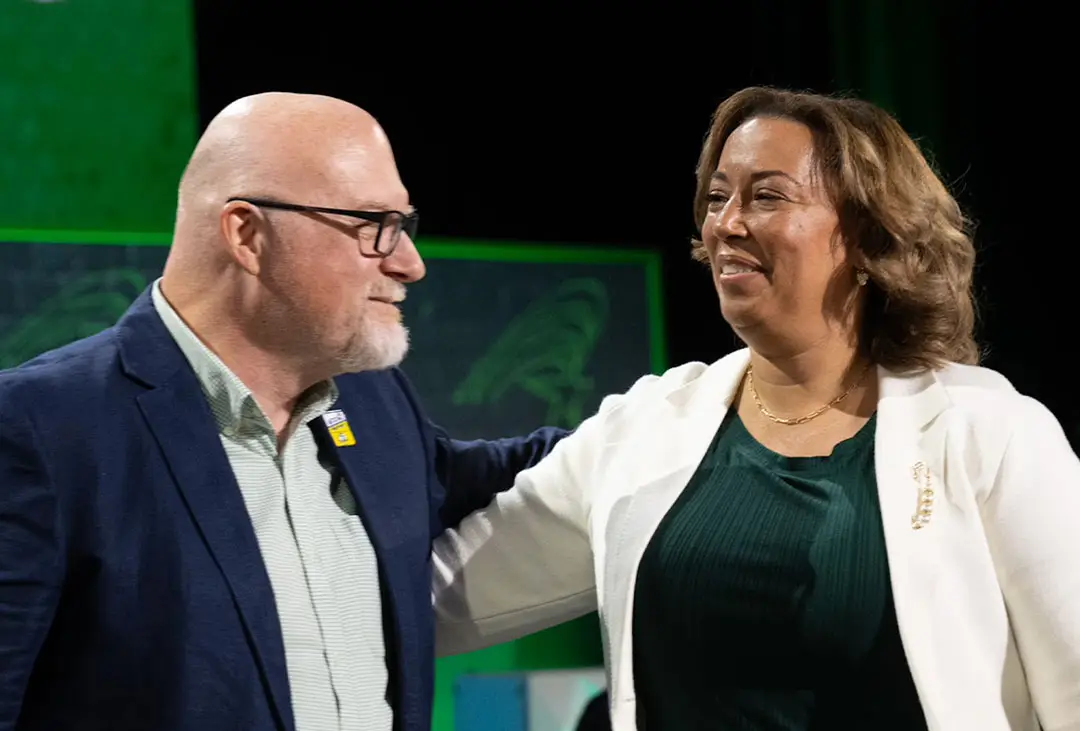
Lee A. Saunders was elected International president in June at the International Convention, becoming the union's first African-American president.
Saunders sworn in
Lee Saunders is sworn in as president of AFSCME at the International Convention in Los Angeles.
2013
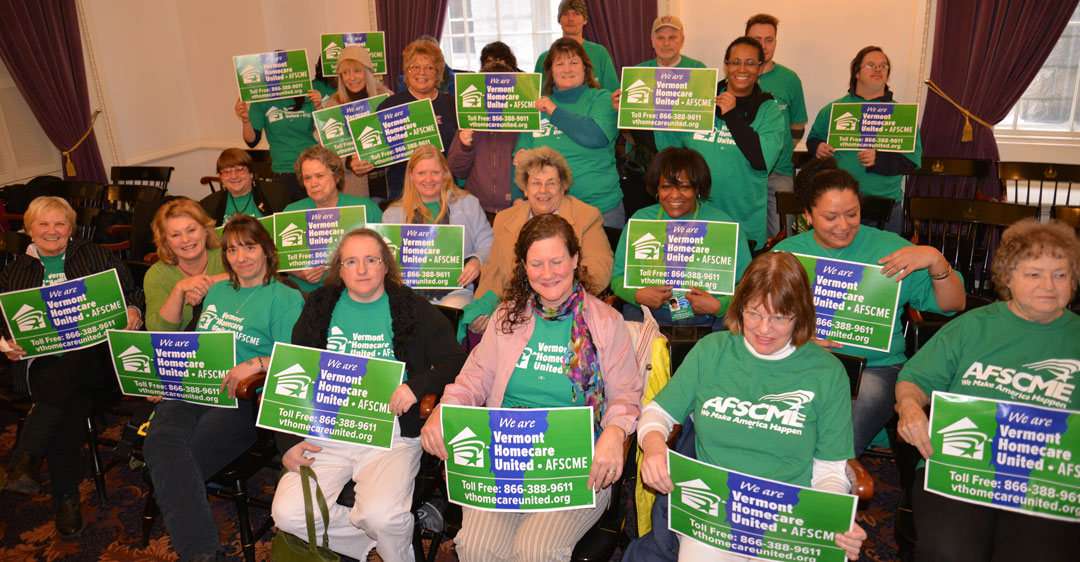
AFSCME continued to aggressively organize new members, adding thousands of emergency medical services workers and 7,500 Vermont home care providers, who later won raises of up to 30% in their first contract.
Vermont home care providers
7,500 Vermont home care providers organized with AFSCME and won significant raises in their first contract.
2014
AFSCME initiated the 50,000 Stronger program to organize new members. The International Union and affiliates nearly doubled the goal — adding 92,155 members by the time of the International Convention in July.
2014 Convention
AFSCME launched the 50,000 Stronger program to organize new members.
2015
President Saunders initiated AFSCME Strong, a comprehensive expansion of the 50,000 Stronger campaign to strengthen our union in the workplace and add new members, in order to overcome attacks from anti-union billionaires and politicians.
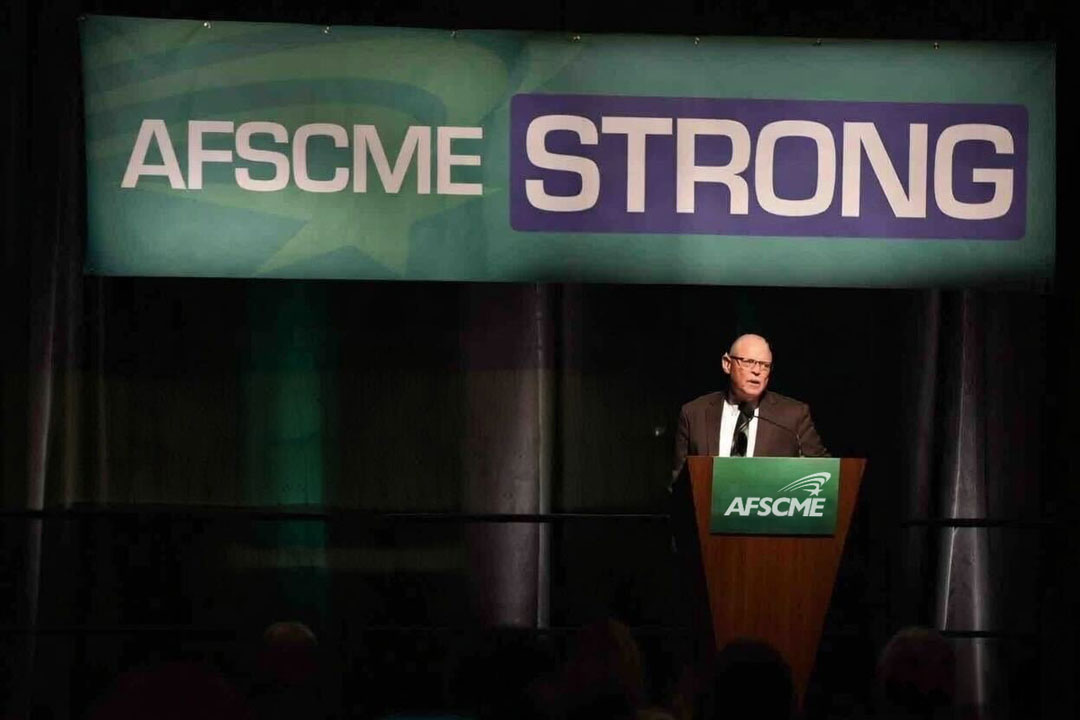
AFSCME Strong
President Saunders speaks to members about the importance of staying AFSCME Strong.
2016
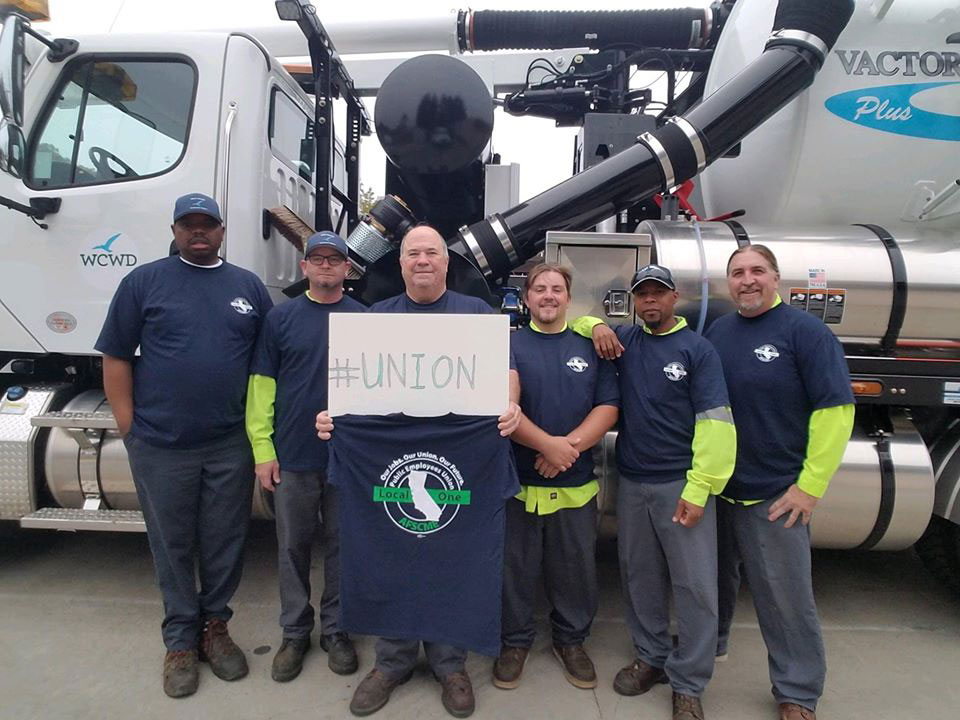
President Saunders was reelected at the 42nd International Convention. Workers from Public Employees Union, Local 1, in Northern California voted to affiliate with AFSCME, adding more than 6,500 new members.
Local 1
Members of Public Employees Union, Local 1, in Northern California vote to affiliate with AFSCME.
2017
Republicans assumed full control of the legislature and governor's office in Iowa and quickly went about eliminating collective bargaining rights for public employees. Elissa McBride became secretary-treasurer of AFSCME.
Elissa McBride
Elissa McBride was named secretary-treasurer of AFSCME.
2018
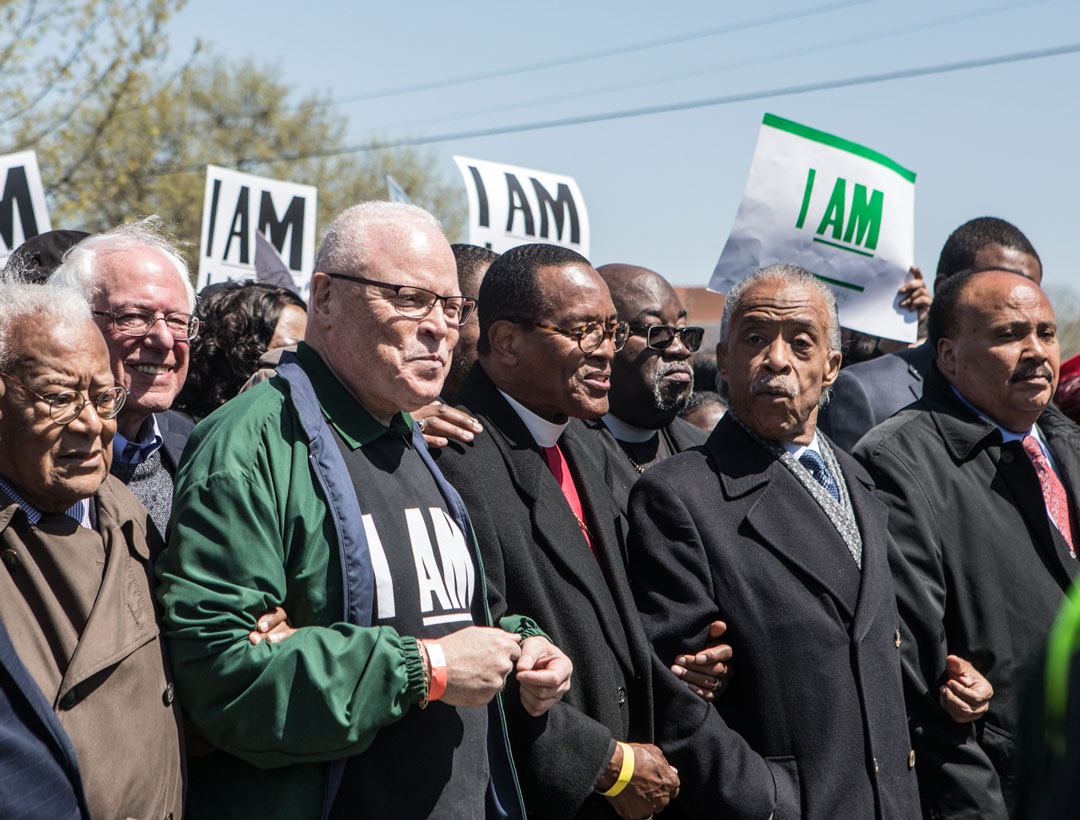
Thousands gathered in Memphis to mark the 50th anniversary of the 1968 Sanitation Workers' Strike. The U.S. Supreme Court, in a partisan 5-4 decision in Janus v. AFSCME Council 31, overturned a four-decade precedent. Because of the groundwork laid by the AFSCME Strong campaign, AFSCME retained 94 percent of the workers it represented.
Memphis march
President Saunders along with thousands marched to commemorate the 50th anniversary of Dr. Martin Luther King Jr.'s death and the Memphis, Tennessee, sanitation workers' strike.
2019
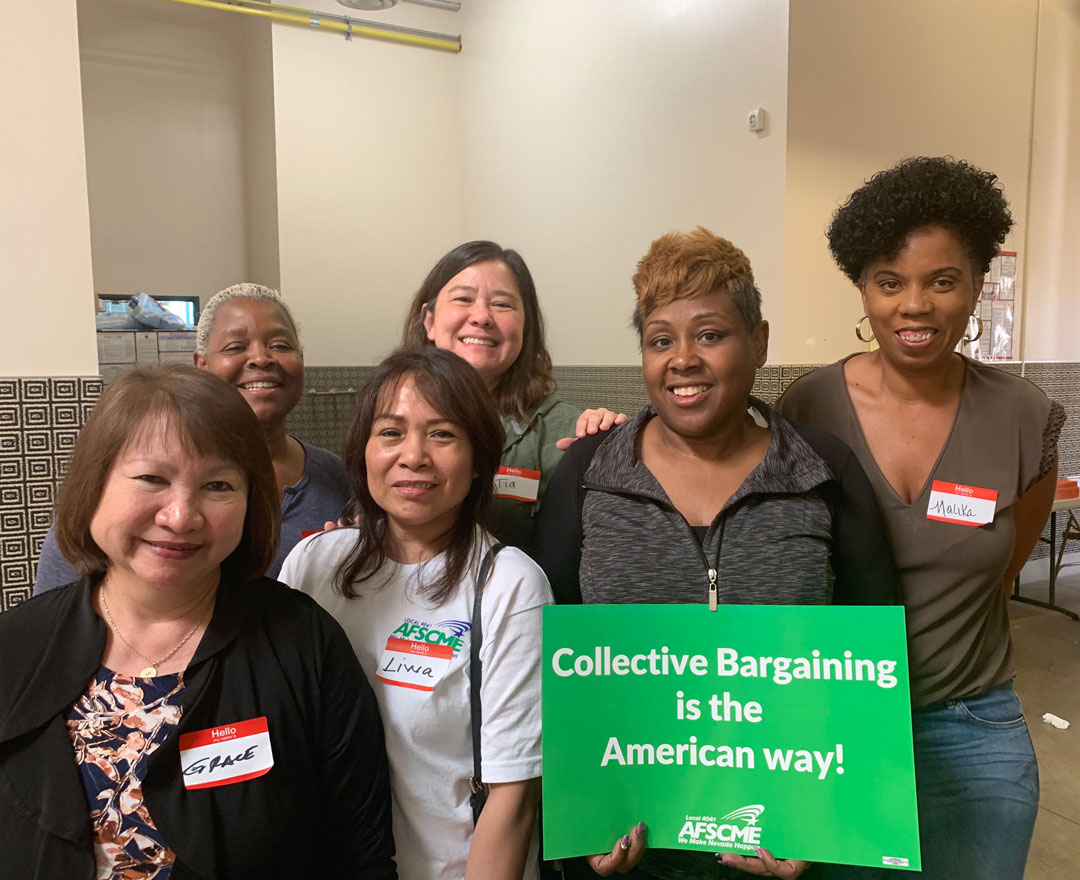
AFSCME continued to expand the rights of public service workers by securing collective bargaining for 40,000 family child care providers in California and 20,000 state employees in Nevada.
Nevada state employees
AFSCME secured collective bargaining rights for 20,000 Nevada state employees.
2020–2023
The Pandemic and its Aftermath
2020
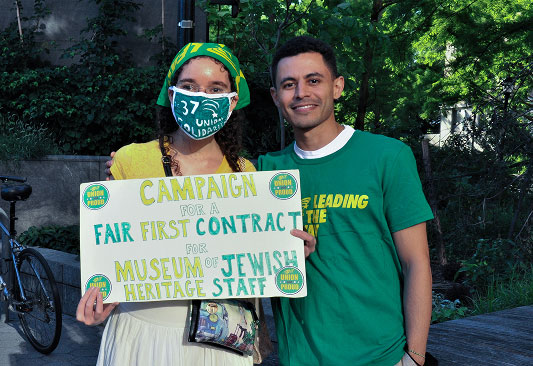
As the COVID-19 pandemic spread rapidly in 2020, essential workers put their lives on the line by working in person on the front lines. AFSCME launched Fund the Front Lines (FTFL), a campaign to urge Congress to approve emergency funding for state and local governments. AFSCME also launched the Cultural Workers United (CWU) campaign.
2020 rally
AFSCME launched the Cultural Workers United (CWU) campaign to organize workers in libraries, museums, zoos and more.
2020
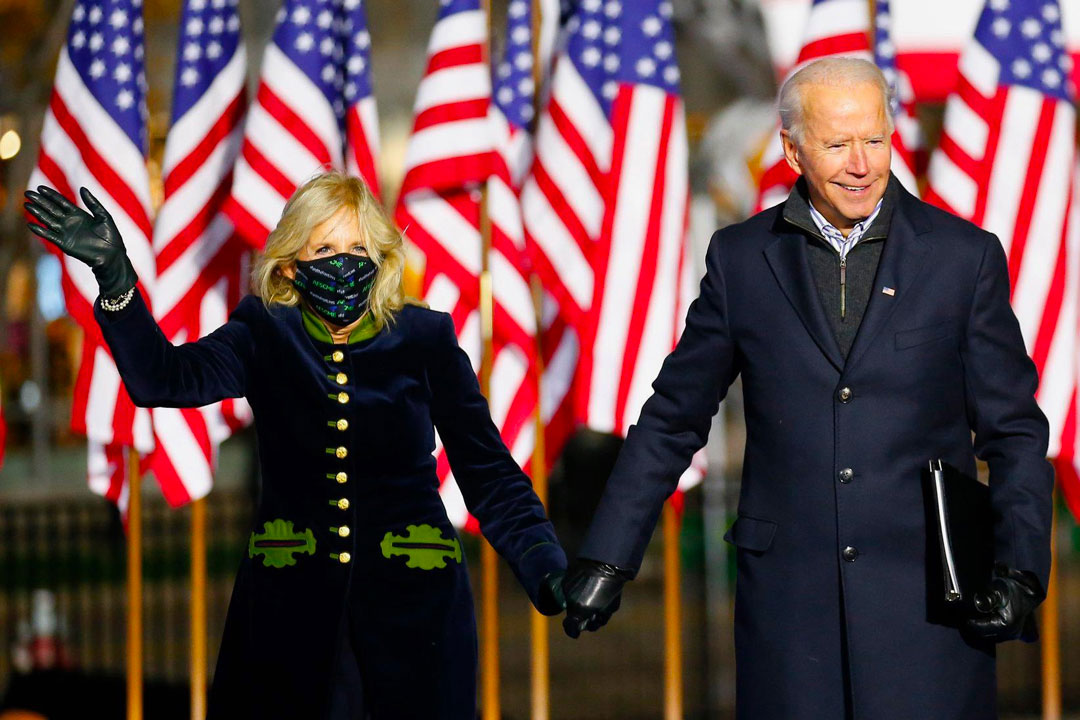
AFSCME members played a key role in electing Joe Biden and Kamala Harris to the White House. AFSCME led a campaign to expand collective bargaining rights to thousands of public service workers in Virginia.
Jill Biden AFSCME
Joe Biden was elected president in 2020.
2021
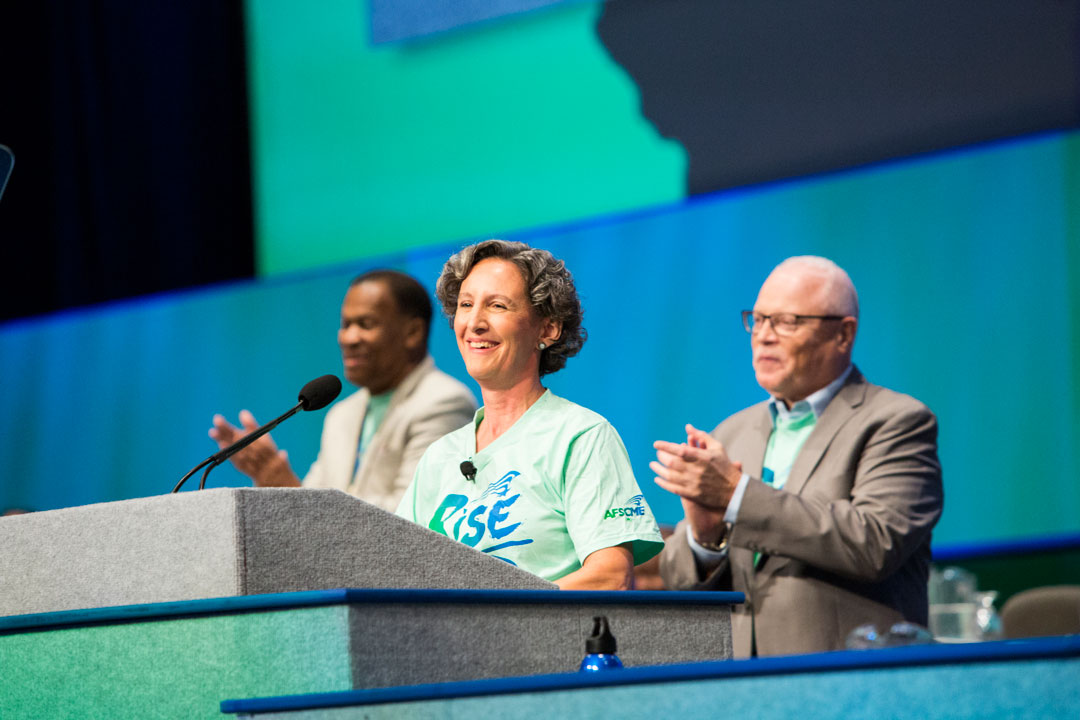
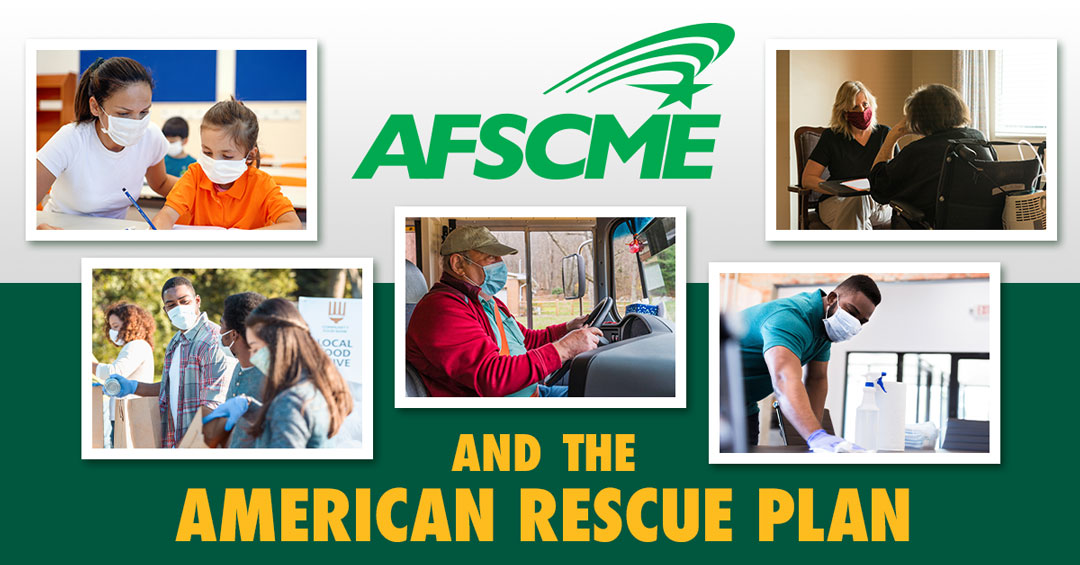
Our union's Fund the Front Lines campaign was successful as President Biden's American Rescue Plan Act included $350 billion in aid to state and local governments and schools.
American Rescue Plan Act
AFSCME members played a key role in passing the American Rescue Plan Act.
2022
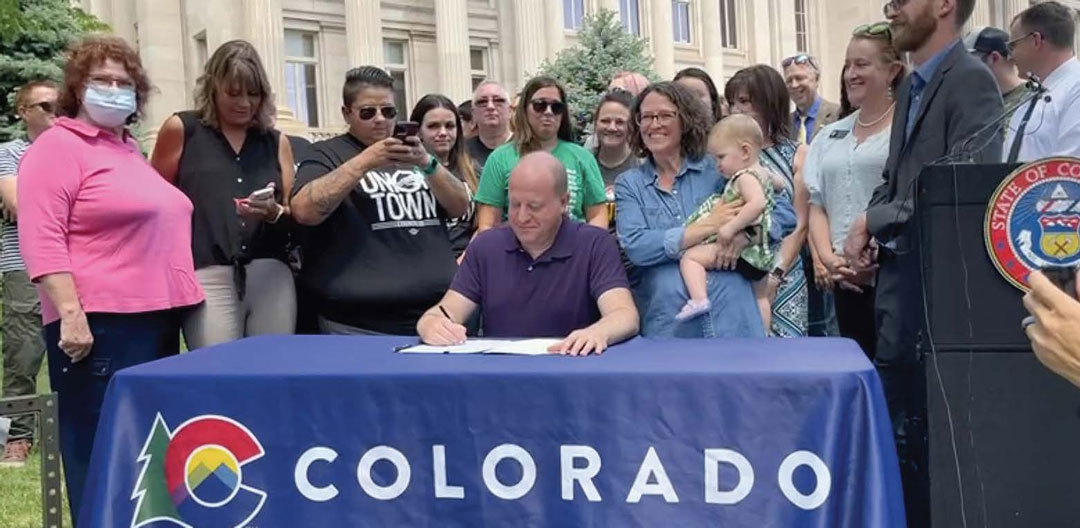
AFSCME members led the push in Colorado to expand collective bargaining rights for county workers. Colorado enacted a law allowing up to 36,000 county workers to form unions.
Colorado county workers
AFSCME members in Colorado led the push for expanded union rights for county workers.
2023
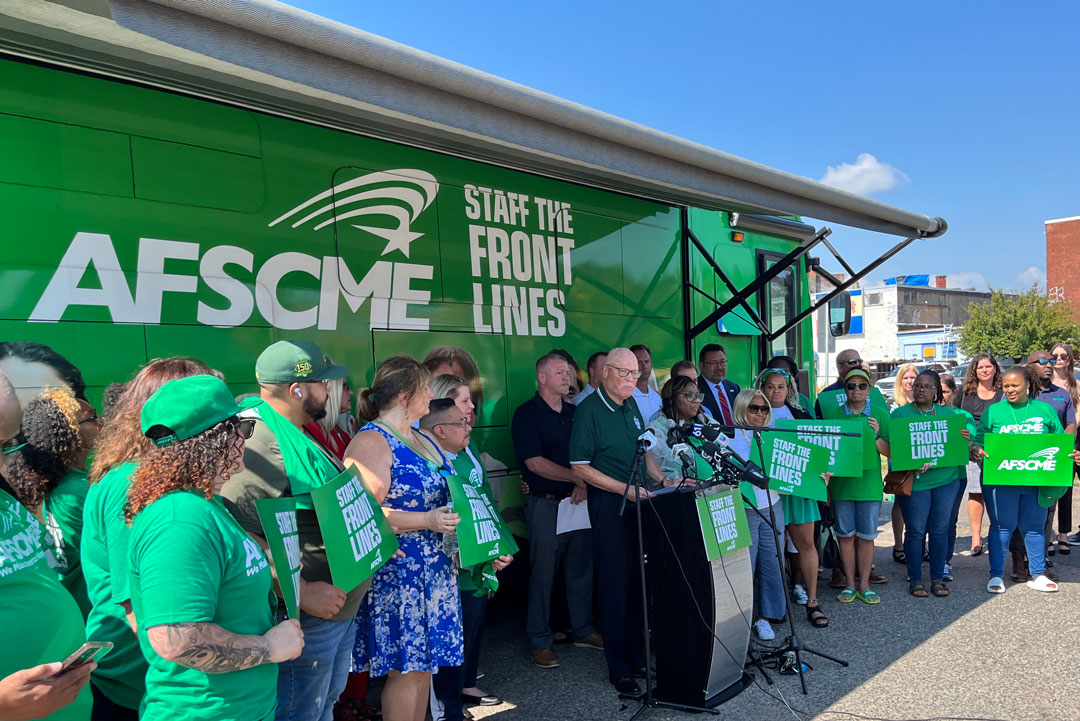
To resolve the public service worker staffing crisis, AFSCME launched the Staff the Front Lines (STFL) campaign. Public service workers negotiated historic contracts with record pay raises.
Staff the Front Lines
AFSCME launched the Staff the Front Lines campaign.
2025
Working People Under Attack
2025
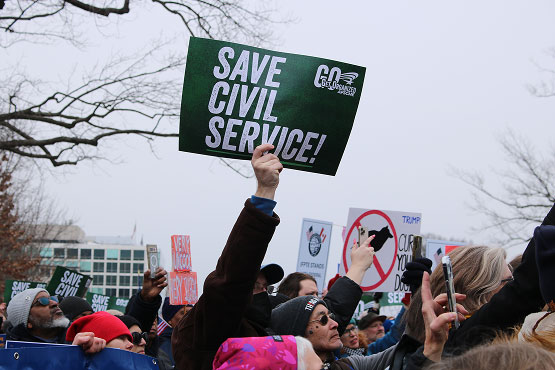
As Donald Trump returned to the White House, billionaires and anti-union extremists orchestrated mass firings of federal workers, set out to destroy public services, and attacked labor unions. To fight back, AFSCME launched the Get Organized (GO) campaign. AFSCME filed multiple lawsuits to fight the administration's illegal overreach. Cultural Workers United reached a milestone — organizing 50,000 cultural workers across the country, more than any other union.
2025 Civil Service Rally
Through the Get Organized campaign, AFSCME members fought to protect public services and lifesaving federal programs.
2026
Although the attacks against us and the essential public services we provide are in many ways unprecedented, AFSCME members are fighting back. At a time when public approval of labor unions has soared to levels not seen in decades, our union is growing. Workers across the country are joining the AFSCME family. We remain hopeful, resolute and empowered. Inspired and emboldened by our long history of success, we know we will once again persevere.
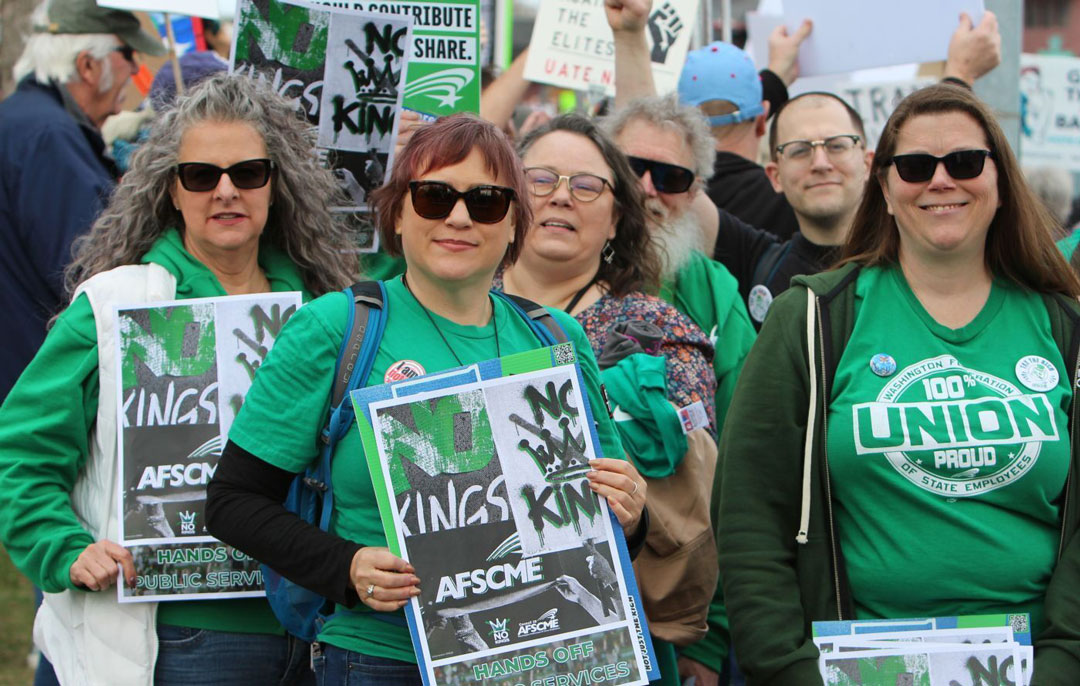
No Kings events
AFSCME members participated in No Kings events in communities across the country.

Join Us

For 90 years, AFSCME members have fought, organized, and won for working people. Today, we’re still making history. Sign up for text alerts to get the latest updates, make a difference for working families, and help write the next 90 years.

† By providing your cell phone number you consent to receive calls (including recorded or autodialed calls, or texts) at that number from AFSCME and its affiliated labor, political and charitable organizations on any subject matter. Your carrier’s rates may apply. You may modify your preferences at: https://www.afscme.org/tcpa.